
By Brian Matambo | Media Director – 13 June, 2026
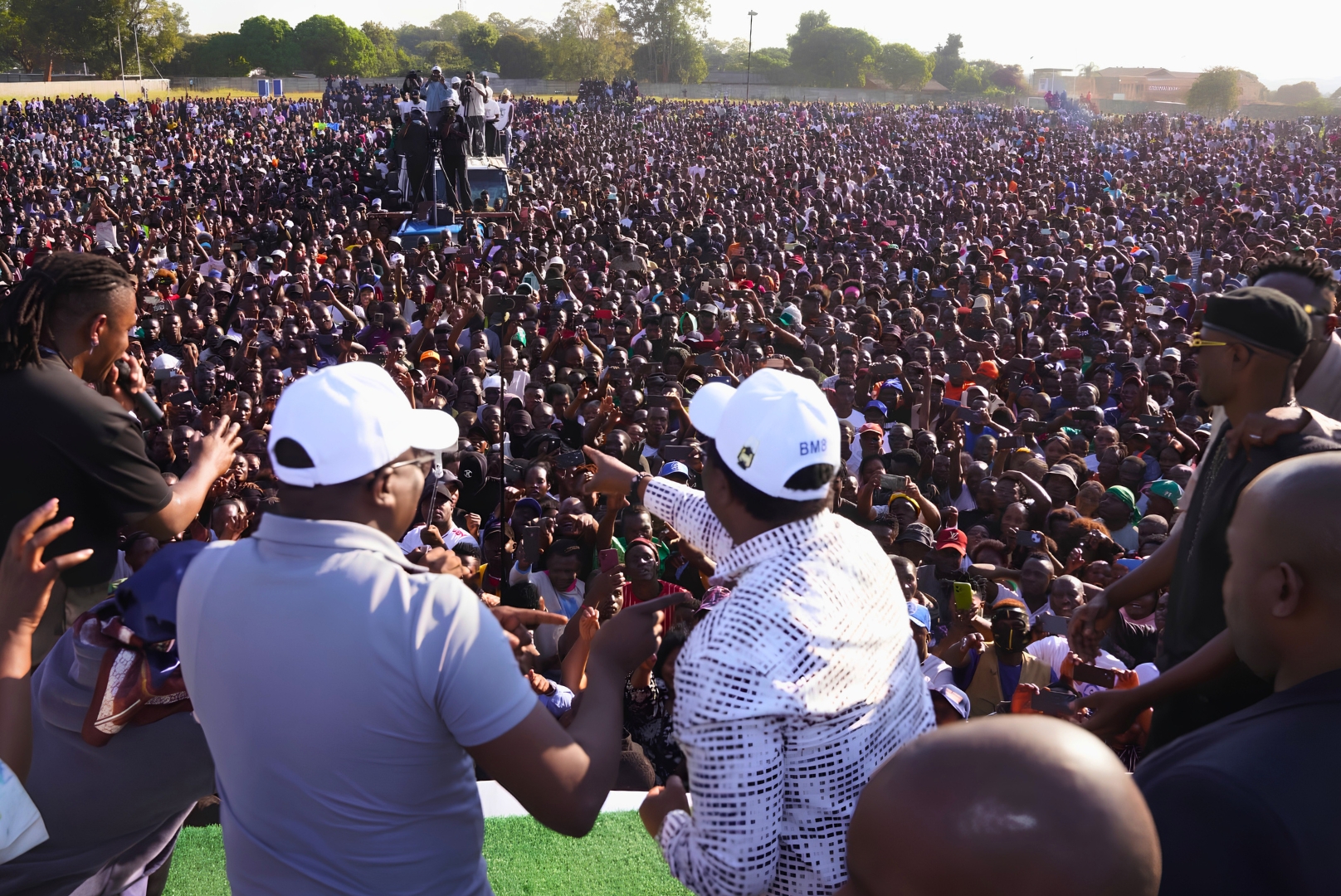
The Kitwe rally has become an important political talking point, not only because of the crowd that turned up, but also because of what the rally may signal about the mood on the Copperbelt. In a post-rally YouTube analysis hosted by Brian Matambo, Media Director in the Tonse/PF Pamodzi Alliance, together with Dr Winfried Kondowe, the discussion focused on the size of the crowd, the political meaning of Kitwe, and the issues that may shape the campaign going forward.
Firstly, Kitwe was a strategic choice. The Copperbelt has about 1.296 million registered voters, making it the second-largest voting province after Lusaka. Kitwe alone has about 329,000 registered voters, making it the largest district on the Copperbelt in terms of registered voters. For a campaign trying to show seriousness, launching strongly in Kitwe was not accidental. It was a numbers decision.
Secondly, the Copperbelt is important not only because of its registered voters, but also because it remains central to Zambia’s economy through mining, suppliers, contractors, workers, and mining communities. The discussion argued that any campaign that wants to win national confidence must speak directly to the people who live around the mining economy and feel excluded from the wealth generated by Zambia’s minerals.
The show discussed the proposal that 50 per cent of the mining business should go to Zambians. This is politically significant because many Copperbelt residents, especially suppliers, youths, contractors, and mining communities, feel that they have not benefited enough from the mining sector. The analysis framed this as an ownership question: Zambia cannot continue producing mineral wealth while citizens remain spectators.
The discussion also touched on young people involved in small-scale mining, including in areas such as Senseli and Mufumbwe. The argument was that young Zambians should not be treated as criminals for trying to participate in the mineral economy of their own country. What they need is safety, licences, equipment, regulation, and support, not threats, exclusion, or politically selective access.
The analysis also raised the question of democratic freedom, whether in relation to the infamous Bill 7, Bill 13, the cyber laws, or broader concerns about shrinking democratic space under the UPND government. Citizens may not always speak in legal language, but they understand when they are afraid to comment on the radio, post freely on social media, or criticise those in power.
The analysis also highlighted the public prayer by Hon. Makebi Zulu for President Brian Mundubile on stage as a spiritually important image. The moment was interpreted as a sign of unity, discipline, faith, and partnership within the ticket. In modern politics, such moments matter because voters remember.
The crowd itself was also treated as part of the message. From the visuals discussed on the show, the rally appeared to attract many ordinary residents, not only party cadres in regalia. Clearly, the campaign is generating interest beyond the usual party structures.
For the UPND, the Kitwe rally should not be dismissed. The ruling party now has to answer direct questions on the Copperbelt: Are local suppliers benefiting? Are young people getting mining opportunities? Are communities seeing value from mineral wealth? Are citizens freer today than they were before? These are the questions that may define the Copperbelt vote.
The Kitwe rally does not decide the election, but it has set an important tone. From the analysis by Brian Matambo and Dr Kondowe, the key takeaway is that the Copperbelt remains a decisive political and economic battleground. The rally showed numbers, energy, and symbolism. In political terms, Kitwe was “notice served”.
Leave a Reply