

By Brian Matambo – 8th April, 2026
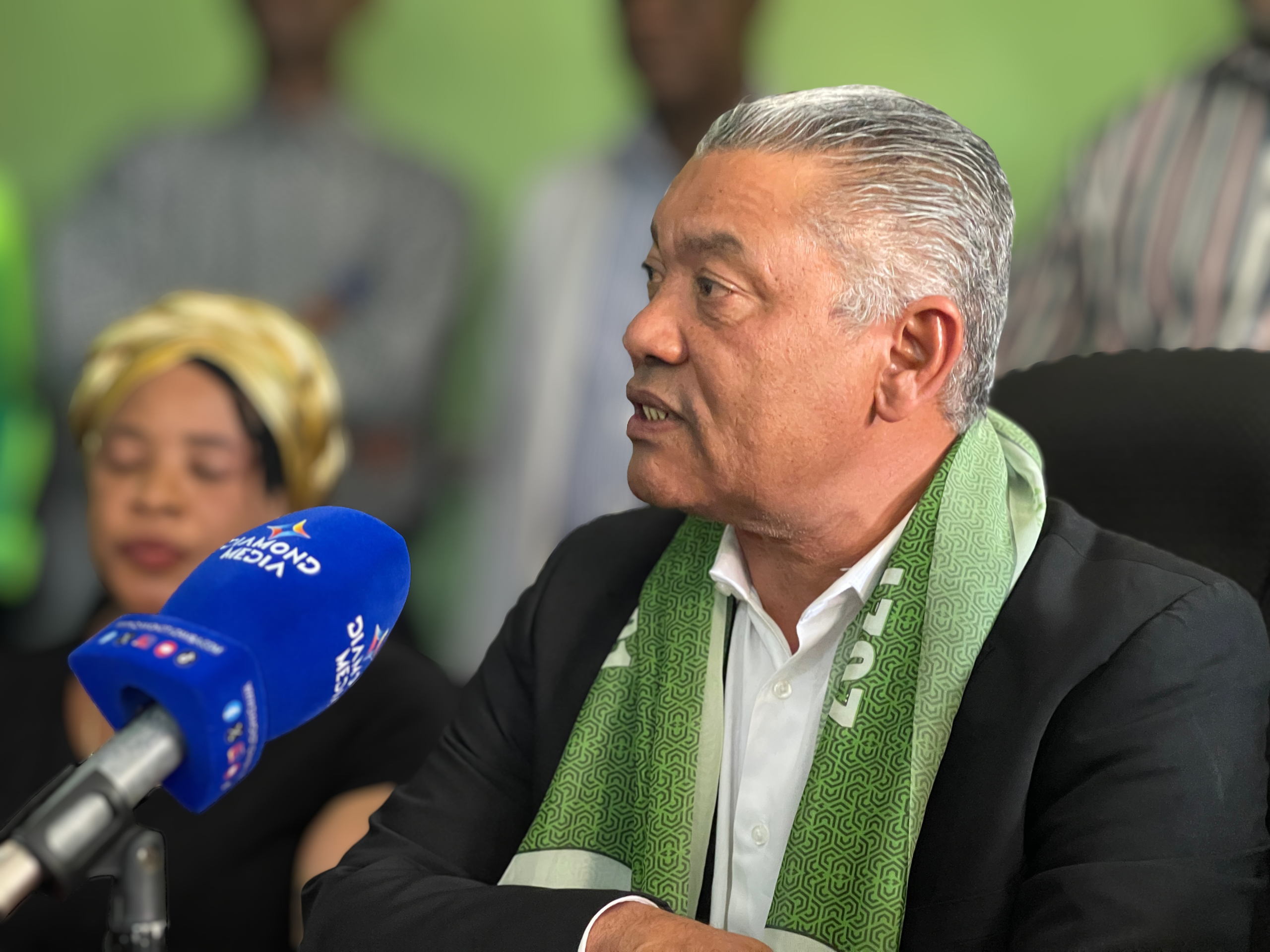
Honourable Given Lubinda, former Member of Parliament for Kabwata, former minister in the Patriotic Front government, and Patriotic Front Vice President, addressed the media today in Lusaka. Honourable Lubinda was speaking for the first time since the Patriotic Front held a no-name party convention in which late former President Edgar Chagwa Lungu’s lawyer and family spokesperson 44 years old Honourable Makebi Zulu emerged winner.
In a lengthy and carefully structured address, Lubinda used the briefing to set out his account of the Patriotic Front’s recent journey, reflect on his conduct during one of the party’s most difficult periods, speak to the significance of the 21 March convention, and at the same time affirm his place within the broader opposition project.
The speech was significant not merely because of what Lubinda said, but because of the posture he adopted throughout. He did not speak as a man seeking rupture. He did not present himself as standing apart from the movement. Instead, he projected calm, restraint, and a continued willingness to remain available for what he described as the larger cause of opposition unity and transition.
That balance is what made the address politically important. Honourable Lubinda began by placing himself within the history of the Patriotic Front, thanking both late President Michael Sata and late President Edgar Lungu for the trust they had placed in him over the years. From there, he moved into an account of the period from 2021 to the present, describing it as a season of adversity marked by resignations, destruction at the secretariat, harassment, court battles, and uncertainty over party leadership.
In doing so, he was not only narrating party history. He was also reminding the movement and the country that he had remained present during a difficult chapter in the party’s life. That framing ran through the entire address. Honourable Lubinda consistently spoke as a man who had carried institutional responsibility through the movement’s weakest hour and who now believes that history should record that fact correctly.
The centre of the speech, however, lay in his handling of the convention of 21 March 2026. Honourable Lubinda was clear in setting out his understanding that the gathering was a no-name convention held under legal restraint. He stressed that the court order in force had made it necessary to avoid using the PF name and argued that the convention was intended to respond to the immediate demand for a flag-bearer while leaving room for a later transition into the PF, should the legal position allow, or into another agreed special purpose vehicle.
That distinction was one of the most important political points in the speech. It allowed him to acknowledge the practical result of the convention while also underlining the broader legal and organisational questions that still surround Patriotic Front politics. In effect, he accepted the political reality produced by the convention while emphasising that the wider process of transition remains important.
That is why his speech must be read as both acceptance and statesmanship. On one hand, he stated plainly that he accepts the outcome of the convention. On the other, he drew attention to the importance of process, consultation, and mutual understanding in moments of transition. His reflections on the petition lodged by four of the five unsuccessful presidential candidates highlighted his continued interest in fairness and orderly procedure within the movement.
That section of the speech was important because it revealed the core of his concern with institutional standards. By framing the issue around process and conduct, he presented himself not as a man preoccupied with personal disappointment, but as a senior figure concerned with how political decisions are managed and how grievances are addressed within a party that seeks to govern.
Even so, he kept the address firmly within constructive boundaries.
That was the other major feature of the briefing. After recounting difficulty, disappointment, and internal strain, Honourable Lubinda still offered himself for any role that would help restore unity and advance the broader opposition effort. He repeatedly returned to the need for transition, negotiation, and collective purpose. He also encouraged a political culture marked by humility, respect, and maturity in dealing with internal differences.
This is where the speech became more than a personal reflection. It became an intervention in the wider political culture of the movement. Honourable Lubinda was effectively arguing that a strong political project must have room for consultation, discipline, and respect among its senior figures if it is to move forward with stability and credibility.
His remarks on Miles Sampa and the continuing court disputes reinforced that point. Lubinda argued that the moment called for negotiation and political settlement. He said the opposition had already spent too much time in legal processes and urged his colleagues to pursue a political solution that would make transition possible and improve the chances of placing the presidential candidate on the PF ballot.
Honourable Lubinda was arguing that political crises are not resolved by legal processes alone. In his reading, the movement now stands at a stage where strategy, consensus, and settlement matter greatly.
Seen in full, the speech served four purposes at once. First, it was a historical account of Lubinda’s role since 2021. Second, it was a reflection on the significance of process and orderly conduct in the no-name convention and in the handling of concerns arising from it. Third, it was a call for maturity, humility, and responsible leadership in a delicate season. Fourth, it was an affirmation of Lubinda’s continued relevance within the PF and the wider opposition space as a senior figure committed to unity and transition.
That combination explains why the speech is likely to matter in the coming days. It did not shut the door on difficult questions. It kept Honourable Lubinda within the conversation and positioned him as a man still committed to the broader project. It also invited those now around the convention winner to demonstrate that their calls for unity can be matched by inclusiveness, consultation, and room for senior voices within the movement.
In hard political terms, Lubinda’s address was the statement of a senior figure who has chosen, at least for now, to contribute to the shaping of the process while remaining firmly within the project itself. That may prove to be the most important takeaway.
Leave a Reply