

By Brian Matambo – Friday the 13th, March, 2026
The Patriotic Front is approaching one of the most consequential decisions in its history. This is not merely a leadership contest. It is not a ceremonial internal exercise. It is not a family gathering to reward loyalty, familiarity, or seniority. It is a moment of political survival.
At this hour, the party stands before a hard and unforgiving truth. It must choose between comfort and conquest. Between internal familiarity and national appeal. Between the politics of sentiment and the politics of victory.
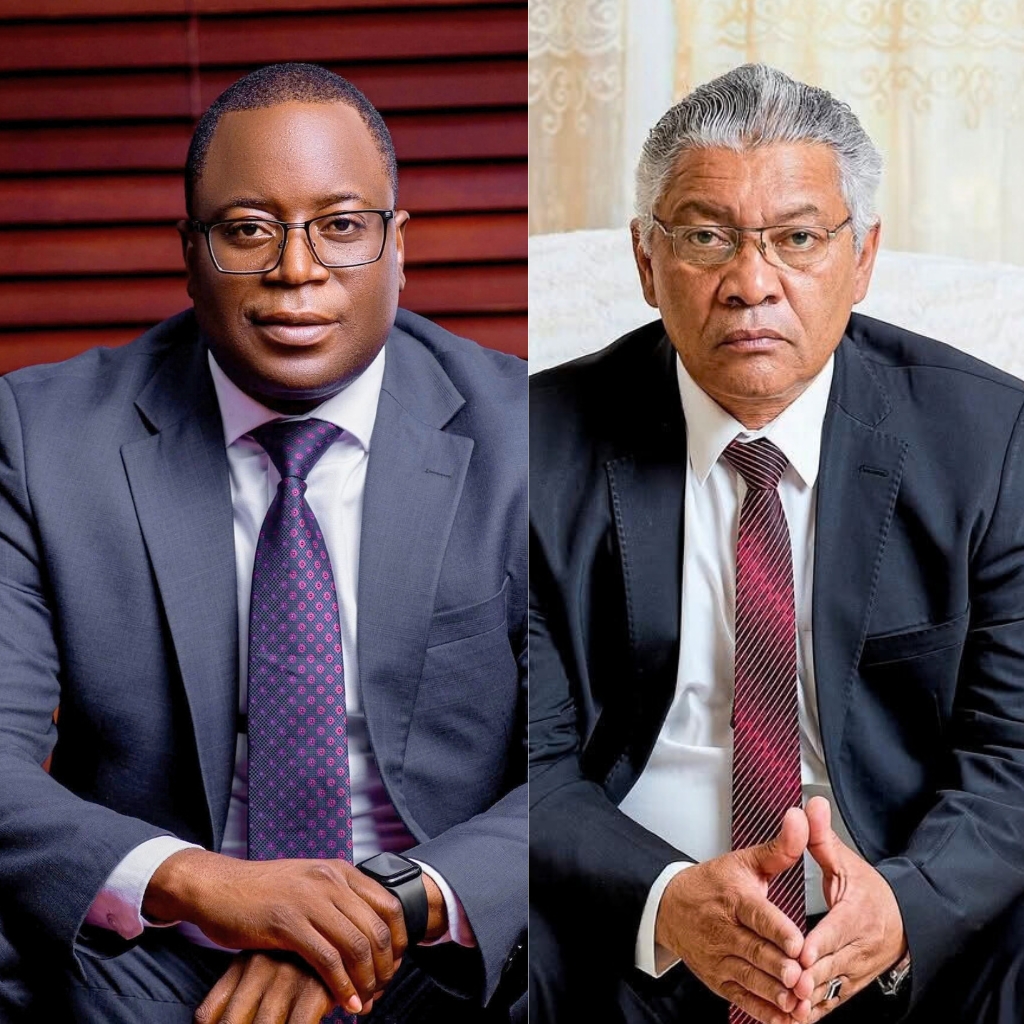
At the centre of this choice stand two men amongst others: Given Lubinda and Makebi Zulu. One is known within the structures. The other is rising in the imagination of the people. One may be available. The other is sellable. And in politics, especially for an opposition party trying to return to power, sellability is not a luxury. It is oxygen.
That is why Emmanuel Mwamba Verified polls matter. They are not mere social media decorations. They are not idle talk from political spectators. They are a public signal. They are a market test. They are an X-ray of political appetite. And what they have revealed is not ambiguous. They have revealed that Makebi Zulu is the product the market is responding to.
In the second poll of the series, Makebi Zulu secured 40.96%, while Given Lubinda trailed with a humiliating 0.60%. In the final EMV poll, Makebi dominated the online vote with 43.5% and then proved the depth of that support again in the live phone-in segment with 40.1%. That matters. A click is easy. A phone call demands effort. It demands intention. It demands interest. It demands belief. And people made that effort for Makebi.
Those numbers are not a side note. They are the loudest thing in the room. A party that ignores such numbers is not being wise. It is being reckless. It is walking blindfolded toward defeat. It is mistaking internal applause for public support. And that, in the cruel mathematics of politics, is how parties die.
The endgame is not to win a convention hall. The endgame is to win the country. That means the PF must stop behaving like a club choosing a chairman and start behaving like a machine preparing to sell a presidential brand to millions of Zambians.
Politics is a sales project. Elections are a marketplace. Leadership is a product decision. And that is where the supermarket analogy becomes not just useful, but devastatingly accurate.
Walk into any supermarket and look carefully at the shelves. You will find products that have been there for a long time. Some are familiar. Some are backed by respected names. Some have a history. Some were once powerful. But many of them gather dust. They are present, but they do not move. They are available, yes, but nobody is reaching for them.
Why? Because availability is not the same as demand.
A product can be on the shelf and still be unwanted. A product can be respectable and still be unsellable. A product can have a history and still fail in the market. If the packaging is tired, if the promise is weak, if the branding no longer excites, if the consumer does not believe it will improve their condition, they walk past it without apology.
Then next to it sits another product. Fresh. Distinct. Attractive. Compelling. It speaks the language of the consumer. It looks like change. It feels like possibility. It carries the promise of results. It commands attention. People do not merely notice it. They reach for it. They talk about it. They recommend it. They want it.
That is the difference between an available product and a sellable product. This is the exact political dilemma facing the Patriotic Front.
Given Lubinda may be available. He may be familiar. He may be appreciated by many within the party. He may be regarded as a decent man with years of service behind him. All that may be true. But none of that answers the only question that matters in a presidential election: can the people out there buy him? Can he move the market? Can he inspire appetite beyond the walls of the party?
Can he pull undecided voters, energise the base, attract young people, draw public excitement, and create the sense that something new and forceful is arriving?
The external numbers suggest the answer is no. You cannot force consumers to desire a product they have already rejected. You cannot lecture the market into enthusiasm. You cannot package internal loyalty and expect the nation to mistake it for momentum. You cannot take a weak product to a brutal marketplace and then act shocked when it fails. That would not be strategy. That would be self-harm.
Makebi Zulu, on the other hand, is proving that he can move the market. He is proving that people are buying into his brand, his tone, his discipline, his legal sharpness, his courage, and his national posture. He is not merely another aspiring politician floating around the party. He is emerging as a serious political product with traction.
He has visibility. He has energy. He has an edge. He has the ability to make people believe again. And belief is everything in politics.
Nobody votes for a product they do not believe in. Nobody sacrifices for a product that inspires no excitement. Nobody fights to market a product that even insiders privately know cannot win. That is why this choice must now be stripped of emotional fog and examined with political ruthlessness.
The PF is not choosing a pastor for a prayer meeting. It is choosing a product for the national market. And the national market is merciless. It does not care who appointed whom to the Central Committee. It does not care who has been around longest. It does not care who is owed gratitude. It rewards only what it wants.
That is why Members of the Central Committee and convention delegates must resist the temptation to vote like beneficiaries and instead vote like strategists. They must not vote for a man merely because he elevated them internally. They must not vote from habit. They must not vote from fear. They must not vote as if this is a thank-you ceremony.
They must vote as if the future of the Patriotic Front depends on it. Because it does. A delegate who votes for an internally acceptable but externally rejected candidate is not preserving the party. He is embalming it. A delegate who chooses sentiment over sellability is not being loyal. He is helping bury the movement.
This is why the warning must be blunt. If PF chooses a product the market does not want, PF will lose. If PF chooses a candidate who can only win in the room but not in the country, PF will lose. If PF mistakes internal availability for national desirability, PF will lose. And if PF ignores the evidence already flashing before its eyes, it will deserve the defeat that follows.
Makebi Zulu represents something else. He represents market energy. He represents political freshness without abandoning the roots of the party. He represents continuity with electricity. He represents a bridge between the old guard and the next national battle. He is the product with visible appetite around it.
That does not mean senior figures must be discarded. Far from it. A wise Makebi project must reassure the elders and veterans of the party that their place remains secure. It must assure Given Lubinda, Jean Kapata, Professor Nkandu Luo, and other senior figures that the future need not be built by humiliating the past. A strong leader does not erase foundations. He stands on them and carries them forward.
That is where Makebi’s maturity becomes critical. He must not only be the sellable product. He must also be the unifying salesman of the whole PF shelf. He must make it clear that under his leadership, the party’s historic faces, its senior hands, and its institutional memory will not be discarded. They will be protected, respected, and carried into the future with honour.
That is how great political products are built. Not only through excitement, but through trust. And Makebi Zulu is uniquely positioned to command that trust.
He has already shown fierce loyalty in the defence of the Lungu family. He has already shown discipline in the public square. He has already shown that he can stand in difficult national moments and project seriousness. For many, he is not just a candidate. He is the one figure who appears capable of protecting the dignity of the party’s past while giving it a chance at a future.
That matters.
Because the burden on delegates is now historic. They are no longer merely selecting a leader. They are deciding whether the PF will remain a living political force or become a sentimental museum of its own former power.
They must therefore ask themselves one question with cold honesty: which product can actually win in the national market? Not which product is familiar. Not which product is owed a favour. Not which product is internally convenient.
Which product can sell? Which product can move? Which product can inspire demand? Which product makes the public reach for it?
The evidence points in one direction. Makebi is the product with traction. Makebi is the product with hunger around it. Makebi is the product with visible market pull. Makebi is the product people are already reaching for. And politics, like sales, rewards what moves.
The Patriotic Front must now decide whether it wants to stock the shelf or conquer the market. If it wants to survive, if it wants to return, if it wants to matter again, then the choice is clear.
It must choose sellability. It must choose electability. It must choose the product that people are already buying.
It must choose Makebi Zulu.
Leave a Reply