

By Brian Matambo | 10 March 2026
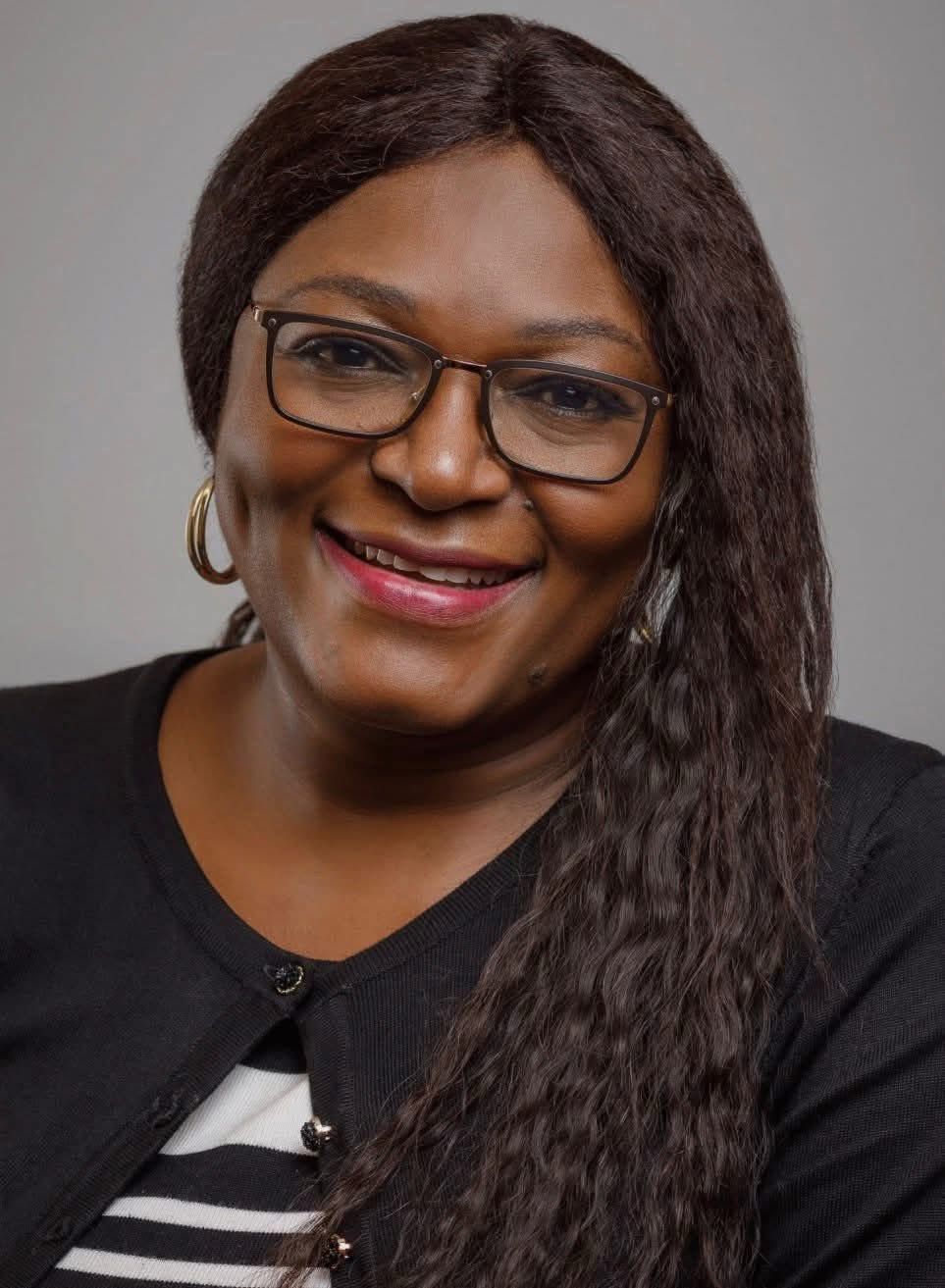
On Monday night, Ambassador Emmanuel Mwamba hosted Dr Mwaba Kasase-Botha on the popular EMV podcast. The broadcast came just hours after Zambia marked International Women’s Day, a day that should have been straightforward but somehow managed to spark debate after national celebrations were scheduled on a Sunday.
In a country that openly declares itself a Christian nation, the decision forced many citizens to choose between church and commemoration. That may sound like a small procedural matter. But in Zambia, small procedural matters often carry deeper political meaning.
Yet once the conversation began, the discussion quickly moved beyond calendars and ceremonies. What unfolded instead was the story of a woman whose life has travelled across three distinct worlds: medicine, diplomacy, and now politics. And through that journey, a wider reflection on Zambia itself quietly emerged.
Dr Kasase-Botha’s story begins on the Copperbelt, in Chamboli township in Kitwe. Her father worked in the mines. Her upbringing, as she described it, straddled two realities after her parents separated. One side offered relative stability. The other exposed her directly to the hardships that many Zambian families know too well.
Those early years matter because they explain something about the tone she carries today. When people see a former ambassador to the United Nations speaking about policy, it is easy to imagine a life that began in comfort. But as she reminded listeners during the broadcast, her path began in the same modest environment that shapes millions of Zambian lives.
From Chamboli, she moved through Zambia’s education system, eventually enrolling at the University of Zambia, where she studied science before entering medical school. After practising medicine, she travelled to the United States and enrolled at the University of Alabama at Birmingham, where she specialised in epidemiology and HIV and AIDS research.
These were not ordinary years in public health. Zambia, like much of Southern Africa, was still in the grip of the HIV epidemic.
At the National AIDS Council, she worked on programmes designed to prevent HIV transmission among sexually abused children through post-exposure prophylaxis. That work would later contribute to the creation of the first multidisciplinary “one-stop centre” at the University Teaching Hospital, where victims of abuse could access medical care, counselling, and legal assistance under one roof.
From there she moved into international development work, serving with UNICEF and later with the United States Agency for International Development in Lusaka, focusing on programmes for orphans, vulnerable children, and families affected by HIV.
Her career would then take another turn. Dr Kasase-Botha was appointed by President Michael Sata as Zambia’s Ambassador to the United Nations in New York. For five years she represented the country at the global diplomatic stage.
During that time she served as Vice President of the UN General Assembly, sat on the board of UNICEF, and chaired the Group of Landlocked Developing Countries, advocating for fairer global trade structures for countries like Zambia whose geography limits access to maritime commerce.
But one of the most consequential debates she participated in concerned education.
At the United Nations, the world was transitioning from the Millennium Development Goals to the Sustainable Development Goals, the global framework guiding development policy through 2030.
One weakness of the earlier Millennium Development Goals, she explained, was that they focused heavily on getting children into school while paying far less attention to whether those children were actually learning.
There is, she noted, a crucial difference between being in school and being educated.
The Sustainable Development Goals attempted to correct that weakness by emphasising quality learning standards.
Now let us bring that conversation back home.
Today Dr Kasase-Botha sits inside Zambia’s political arena as Deputy Secretary General of the Citizens First party, led by former Foreign Affairs Minister Harry Kalaba. And from that vantage point she has become sharply critical of Zambia’s current education system.
Her argument is not that free education is wrong. In fact, she acknowledges that access to education is essential. The problem, she says, lies in how the policy has been implemented.
In many schools classrooms now carry as many as 150 pupils. Teachers cannot realistically supervise such numbers. Some children sit on the floor because desks cannot fit into the overcrowded rooms. Homework is rarely assigned because teachers cannot mark hundreds of books.
Under those conditions, she warns, Zambia risks producing a generation that attends school but does not receive meaningful education. Parents may celebrate relief from school fees today. But if the learning environment collapses, the deeper consequence will be something else entirely. A postponement of poverty rather than its elimination.
The conversation then moved to the wider economy as Dr Kasase-Botha pointed to what many Zambians experience every day. The basic monthly food basket now approaches twelve thousand kwacha. Yet the average civil servant earns around five thousand kwacha.
The numbers simply do not reconcile. Inflation statistics may suggest stability, she noted, yet food prices continue to rise in markets across the country. For most families, the economy is not measured in economic reports. It is measured in whether there is food on the table.
Despite a distinguished diplomatic career, Dr Kasase-Botha made the deliberate decision to enter partisan politics. She joined Citizens First, aligning herself with Harry Kalaba, whom she first encountered during his tenure as Minister of Foreign Affairs. What impressed her, she said, was his view that national resources do not belong to those who occupy public office. They are entrusted to leaders on behalf of the people.
For her, that philosophy represented the kind of political culture Zambia requires. But politics in Zambia is rarely straightforward.
As the 2026 general elections approach, the opposition faces a difficult terrain. Opposition parties remain fragmented even while acknowledging that unity may be their only realistic path to electoral success.
Administrative hurdles have also played a role. Citizens First itself spent more than nine months navigating regulatory processes before receiving its clearance certificate from the Registrar of Societies following its party convention.
At the same time, opposition leaders have raised concerns about the electoral environment. Voter registration increases appear significantly higher in provinces considered strongholds of the ruling party, raising questions that the Electoral Commission will eventually have to address. Whether those concerns prove justified or not, one fact is clear. Zambia’s political climate is entering an intense period.
Perhaps the most emotional moment of the interview came when Dr Kasase-Botha spoke about the unresolved burial of former President Edgar Chagwa Lungu. Nearly nine months after his death, the matter remains unsettled. For her, the issue is no longer about legal positions or political arguments. It is about something more fundamental.
In Zambia, death has traditionally been a moment when communities unite in mourning. Political differences are set aside. Families are given space to grieve. That tradition, she suggested, is now under strain. You may disagree with that interpretation entirely. You may believe the dispute is simply a matter of law and procedure. But the larger question remains unavoidable. What does it say about a nation when the passing of a former head of state becomes a prolonged national stalemate?
Before the interview concluded, Dr Kasase-Botha offered a message to young women across the country. Her own journey, she reminded listeners, did not begin in privilege. It began in Chamboli. Education, perseverance, and focus carried her forward. Those same tools remain available to the next generation.
And as Zambia moves steadily toward the elections of August 2026, voices like hers suggest that the country’s political conversation is entering a new phase. Whether that phase produces renewal or deeper division will not be decided in interviews or podcasts. It will be decided by the choices Zambians make when they eventually step into the voting booth.
Leave a Reply