

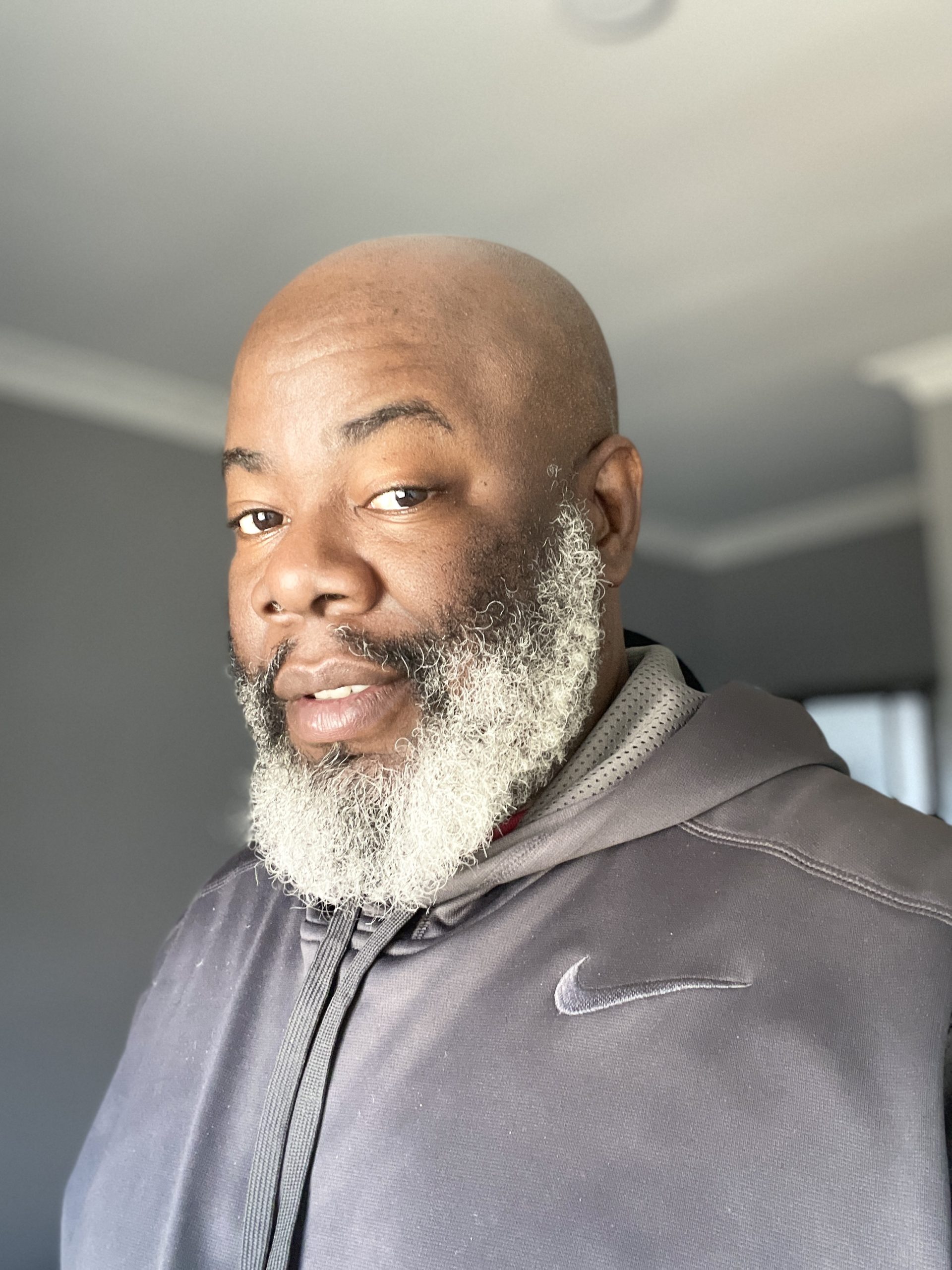
By Brian Matambo | Lusaka, Zambia
This was a private conversation with a political heavyweight in Zambia. I will not name the person. What matters is the substance of what we talked about, because it captures with unsettling clarity the crossroads at which the opposition now stands as the country approaches the 2026 general elections.
In the wake of the Chawama by-election won by the Tonse Alliance on the FDD ticket, the conversation revolved around one central warning: the opposition risks collective failure, not because the ruling party is invincible, but because ego, celebrity politics, and selfish calculation at the top are blocking strategic clarity.
My counterpart began by drawing a sharp and uncomfortable distinction between ordinary citizens and political leaders. The ordinary people, they argued, are far more alert to the real danger facing the country than the elites who claim to lead them. The failure is not at the base. It is at the top. Leaders are too busy protecting their positions, their visibility, and their personal relevance to confront the existential stakes of this moment. If leaders do not first grasp the danger, the message cannot filter down to the people who actually carry the vote.
I then introduced what I believe is the psychological core of the problem. Many contemporary politicians are not driven by ideology, policy, or national duty. They are driven by the desire for celebrityhood. Politics has become a shortcut to recognition. Artists, musicians, and actors work for years before applause finds them. Politicians, by contrast, want to step straight onto the red carpet. Titles, motorcades, and the intoxicating repetition of “Honourable” become addictive.
This produces a specific fear. It is not primarily the fear of losing state power, because many of these politicians privately know they are unlikely to win it anyway. The deeper fear is losing relevance, losing the limelight, losing the sense of being somebody. That is why stepping aside for a stronger candidate becomes psychologically impossible, even when it is strategically obvious.
This, more than ideology, explains why weak candidates insist on running, why fragmentation persists, and why unity talks repeatedly collapse. It also explains why, as I bluntly put it in the conversation, useless people enter politics. Politics has become an identity crutch rather than a service platform.
We then turned to the by-elections in Chawama and Petauke. We agreed that these were not isolated contests. They were protest votes against the ruling party. The ruling party was deeply unwanted in those constituencies, particularly because of their symbolic association with the late Dr. Edgar Chagwa Lungu. The electorate’s message was not subtle. Whoever best represented opposition sentiment stood to benefit.
I insisted these elections should have been used as a temperature check by opposition leaders. Instead, some leaders spun third-place finishes as victories, or worse, as proof of relevance. A distant third, especially where the gap between second and third is wide, is not competitive. It is relegation. Dressing it up as success is self-deception.
I openly ridiculed the logic that merely participating among “over 200 registered political parties” is a win. In a high-stakes national moment, participation without impact is political noise, not leadership.
Our discussion then shifted to data, because politics without data is guesswork masquerading as strategy. I shared findings from my own data-driven analysis. Southern Province is structurally difficult terrain for opposition forces, particularly since the emergence of UPND. Historical voting patterns from 1996 onward show deeply entrenched behaviour. Since UPND began contesting seriously in 2001, it has consistently posted above-average results in Southern Province, starting around 72 percent and climbing to over 90 percent support. Parliamentary dominance followed naturally.
By contrast, PF’s performance in Southern Province has historically been marginal, at times falling below one percent, with humiliating vote gaps in certain by-elections. The conclusion is unavoidable. Southern Province is not where elections are won for the opposition. Pretending otherwise is strategic fantasy.
The analysis then broadened to Lusaka and the Copperbelt, where trends are more fluid and therefore more decisive. Here, the data tells a different story. PF once dominated Lusaka, but its support declined as UPND rose, effectively swapping places. Similar patterns appear on the Copperbelt. Unlike Southern Province, these regions respond to performance, economics, and lived experience.
At this point, my counterpart quoted New Heritage Party President Madam Chishala Kateka who once said that UPND was an attractive opposition, but it is not an attractive incumbent. In power, the party has failed to generate goodwill, tangible improvement, or a season of favour. Unlike previous governments that at least enjoyed a honeymoon period, UPND never truly secured one. Discontent has been present almost from day one.
This is reinforced by contrasting UPND with MMD and PF. Both MMD and PF experienced periods where citizens felt progress or optimism, even if those periods later collapsed. UPND never crossed that threshold of broad public satisfaction.
I added that economic messaging alone is insufficient. Macro indicators, international praise, and flattering foreign headlines mean little to voters whose daily reality is defined by grocery prices, transport costs, and shrinking disposable income. Voters do not live in The Guardian’s economy. They live in Pick n Pay, Choopies, Shoprite, Mtendere Market, in real life on the ground.
I then raised what I believe is one of the most strategically underestimated forces in Zambian politics: the Catholic Church. With millions of adherents, it is a massive moral and electoral constituency. I warned that pastoral messaging focused on injustice, abuse of widows, persecution, and moral authority could decisively shape voter sentiment in the final weeks of a campaign. I noted how quickly even individuals previously aligned with UPND reacted when Archbishop Alick Banda was targeted. Loyalties shift fast when moral lines are crossed.
Eventually, the conversation then returned to opposition fragmentation, betrayal, and manipulation. My counterpart was blunt. Ruling parties fund confusion in the opposition. Some small parties are not meant to win. And I added that their function is to destabilise, delay, withdraw at critical moments, and weaken collective strength. Politicians linger, posture, and wait for inducements. They do not defect early because the best price is paid late.
Judas figures will always exist. Some betray out of malice. Others out of convenience. Others simply because money appeared on the way home. My counterpart lamented that trust, therefore, cannot be assumed. Systems must be built that anticipate betrayal rather than being shocked by it.
Leave a Reply