

By Brian Matambo | Lusaka, Zambia
Barely a week ago, President Hakainde Hichilema stood on the podium and accused clergy of “hiding behind the church.” The crowd applauded. He then invited the clergy, through the Oasis Forum, to State House, where the highly publicised dialogue collapsed into an unfruitful engagement. What followed was another shocking spectacle. The president invited a more friendly, praise singing group of clergy. And that is when things fell apart.
It was during that carefully stage-managed gathering that Victor Kalesha delivered his now infamous attack on Catholic priests, saying unmarried clergy with no children should not speak for the nation. He said it boldly. He said it publicly. He said it with the full backing of a cheering presidential audience. The President himself did not rebuke him. He did not distance himself. He smiled along.
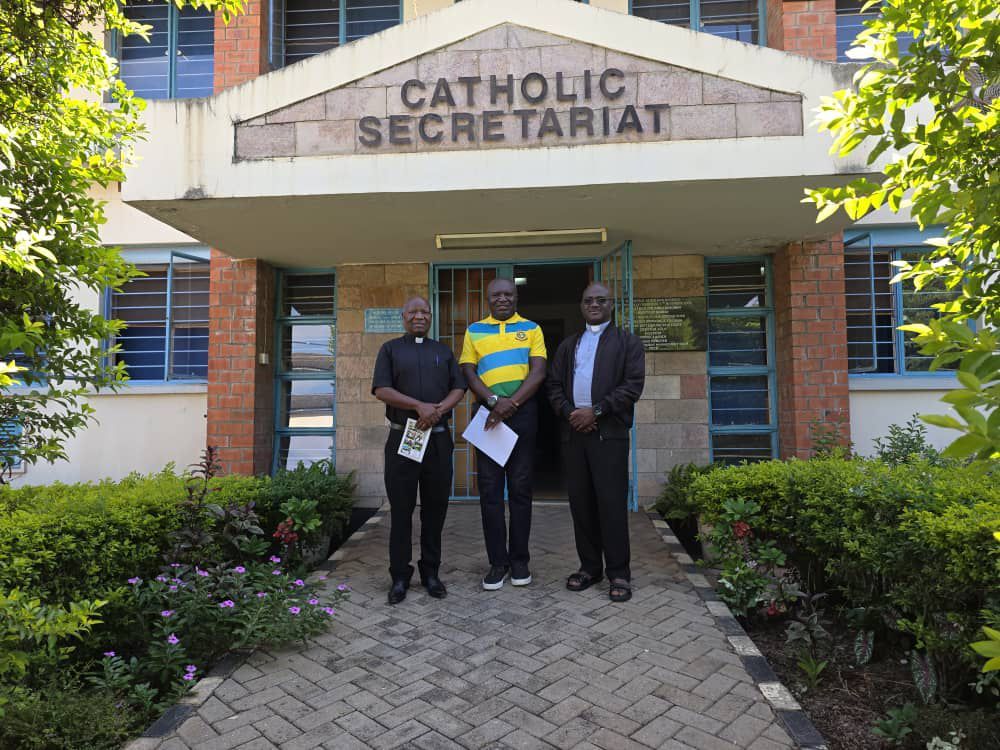
Fast forward to today, and we see a different Victor Kalesha. Head bowed, letter in hand, standing at the Catholic Secretariat to “apologise” for those remarks. A quiet visit. A polite letter. A muted gesture.
But if the insult was shouted from the podium, why is the apology whispered in a corridor? Why did he not return to the same stage, with the same confidence, the same volume, the same applause, and apologise openly to the nation and to the clergy he demeaned?
This is where the political weight of the moment lands heavily on State House. Because if Kalesha’s comments were wrong, then the President’s approval of those comments was also wrong. If Kalesha must apologise, then the President must also apologise. The silence is no longer defensible.
It was the President, after all, who first dismissed the clergy as political actors. It was the President who accused priests of hiding behind the Church. That wound still stands. No letter from a junior official can sanitise a presidential insult.
And the theological failure of Kalesha’s earlier remarks still echoes. Jesus Himself was unmarried. He had no biological children. Yet He spoke for nations. He carried the weight of humanity. His voice was not diminished by the absence of a wife and biological children; it was elevated by the depth of His calling. The clergy he insulted serve in that lineage. They baptise the repentant, comfort the sick, bury the dead, stand with the oppressed, and speak truth to power. To belittle them is to expose one’s own spiritual ignorance.
This moment also exposes a deeper weakness in the regime. A government that insults the Church and then hides from the consequences shows a worrying absence of moral backbone. Praise singers may clap when the clergy are demeaned, but the truth remains unshaken.
Victor Kalesha has apologised. But the President has not. And until Hakainde Hichilema confronts his own words, this issue will not go away. The nation will not forget. The Church will not forget.
And the people of Zambia, a Christian nation by identity and conviction, are still waiting for the real apology.
Leave a Reply