

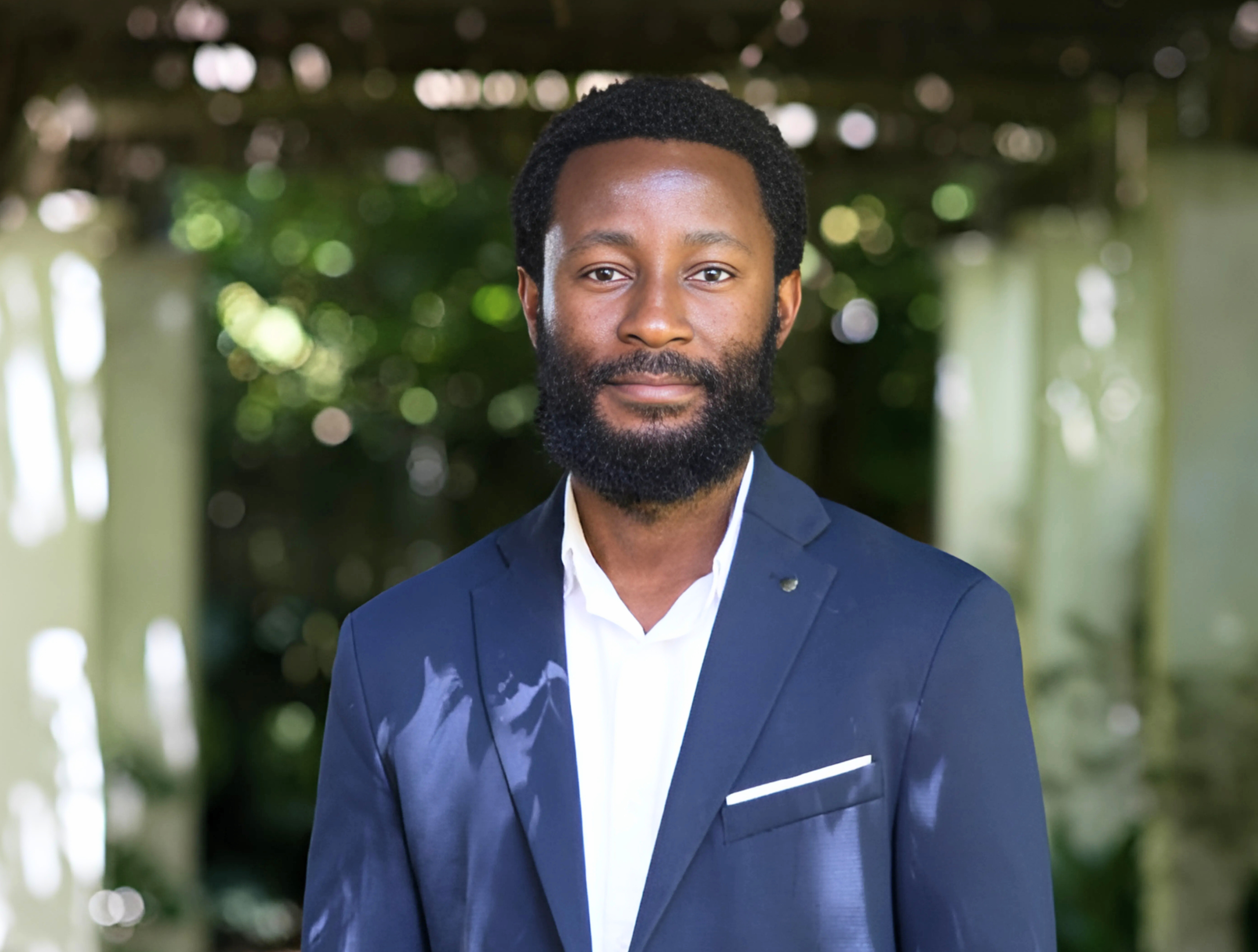
By Sishuwa Sishuwa
Academics and researchers largely study the attributes of political leaders – an important preoccupation, given the consequences of the actions of leaders on governance, populations, and nations. Even more important, however, is a rarely studied category of people who help leaders come to power and enable, shape, or constrain their conduct in public office: supporters. Why do people – and which people – support the leaders they do? Is a leader’s support base homogenous or diverse? And how do the supporters of, say, elected presidents, behave in between elections? These questions got me thinking about Zambia and the supporters of incumbent President Hakainde Hichilema and his ruling United Party for National Development (UPND). What type of supporters does Hichilema have and how have they behaved over the last five years of his term?
In this opinion piece, I focus on two sets of supporters of Hichilema and the UPND, namely “praise singers” and “Zambezi region nationalists” or, simply put, “supremacists”. By Zambezi region, I am referring to parts of Central and the three provinces that share the Zambezi River: Northwestern, Southern and Western. To be sure, there exists other subgroups of supporters of the ruling core within or beyond the cited two broad ones such as the distinct LGBTQ community, the free masons, and independent urbanites whose support for Hichilema and the UPND is strictly defined by shared economic grievances. I have deliberately chosen to focus on praise singers and Zambezi region supremacists because these two types of supporters are as well-known today as “the cadres” were during the Lungu years. I show how these supporters are shaping the character of the Hichilema presidency and laying the foundation for what might turn out to be consequential changes to the direction of political life later this year and beyond.
The terms “praise singers” and “Zambezi region supremacists” have become part of the lexicon of Zambian politics under Hichilema and assumed a cultural identity of their own that resembles how the phrase “party cadres” became synonymous with supporters of President Edgar Lungu and his then ruling Patriotic Front (PF) prior to the 2021 election. Although the terms praise singers and Zambezi supremacists are sometimes used interchangeably, there is a clear distinction between them that has much to do with the degree and geographical spread of support. For instance, one can become a praise singer but membership to the Zambezi extremist group is solely conferred or determined by one’s birthplace.
Below, I discuss in detail what I believe to be the key differences within what is essentially the same support base. For transparency’s sake, I must state from the outset that I hail from the Zambezi region where I was born and grew up there until 2005 when I came to Lusaka for my university education. I consider ethnic-regional nationalism from any part of Zambia as extremely offensive to the very idea of Zambian patriotism. Regional nationalism or supremacy also goes against my personal credentials as a Zambian patriot, which explains why even though I am from the favoured region, I cannot go along with what President Hichilema is doing. Now to the substance of today’s topic.
Praise singers are cross-ethnic in origin, cut across class considerations, and support Hichilema on political or party lines. Majority of their membership is drawn from the minority UPND support base of Eastern and the Bemba-speaking provinces of Muchinga, Luapula and Northern. This majority group from the minority support base feels the need to publicly praise the president and the ruling party as a way of performing loyalty in a deeply polarised political environment where anyone with a typical Bemba name or one from the Eastern Province is assumed, by default, to be a supporter of the vanquished former ruling party, the PF.
I refer to the four provinces where majority praise singers come from – Eastern, Luapula, Northern, and Muchinga – as the Chambeshi-Luangwa region because the two rivers pass through them. A minority of praise singers come from the Zambezi region, the mainstay of Hichilema’s support base. Unlike the Zambezi extremists who are unlikely to ever abandon Hichilema even if he fails to fulfil his electoral promises, praise singers retain the capacity to shift or withdraw their support if the president fails to meet their aspirations and an effective opposition leader emerges.
Praise singers mainly speak to shield the president and the UPND administration from responsibility or blame. Where they attempt to offer criticism of government actions or Hichilema’s leadership, the criticism is so lukewarm that even its target probably sees it for what it ultimately is: flattery or kowtowing of the highest variety. Within this group are two subgroups. One consists of the lowly educated class that defends Hichilema and his party on the streets, in markets, bus stations, and social media. This group is driven primarily by the partisan urge to protect “our party leader”. It is also motivated by access to normal government opportunities such as jobs in the health, education and security sectors, and the consumption of the little crumbs that fall from the high table in a variety of ways.
The other subgroup is made of professional elements of urban middle-class Zambians embedded in civil society, academia, and the private media. These are not card-carrying UPND members, but their personal and business interests make them kowtow to Hichilema. These elites were vocal critics of abuses of government power under the PF but now either have been sucked into various government bodies or are tacitly supporting the president for reasons that have little to do with public considerations. The private media, for example, has positioned itself as a loyal mouthpiece of Hichilema. On the rare occasions it offers criticism, the tone is one of annoyance that the leader’s activities may jeopardise his electoral prospects.
Aware that the survival or viability of the opposition threatens their long-term material interests and business aspirations, this sub-group’s members – who help shape public opinion using diminishing credibility gained from criticising Lungu-era wrongs – have assigned themselves very specific tasks in the public domain: shielding Hichilema from blame, discrediting his critics, and delegitimising the opposition by persuading voters to see them as dangerous. This group is focussed less on defending UPND than on discrediting the opposition and critics of Hichilema.
The Zambezi region supremacists are praise singers, but they are a notch above the choir. Members of this group originate, without exception, from parts of Central and Northwestern, Southern and Western provinces. The supremacists support Hichilema strictly on ethnic-regional lines or considerations. One can easily distinguish them using four common characteristics, which must all be present for one to be considered a supremacist.
The first is their names. Many of those who defend Hichilema to sycophantic levels identify as either ethnic Lozi, Tonga, Kaonde, Lunda, or Luvale by name. They are found on social media, in universities, in the civil service, in the media, in the intelligence and security services – everywhere and take offence at any criticism of the Dear Leader, or his officials from the Zambezi region, however mild. One can easily tell from their name that they are from the Zambezi region. However, there are a few members of the supremacist brigade who have, out of embarrassment, assumed false pseudonyms from outside the Zambezi region for use on social media and other public forums. A good example in this case is Margret Mwanza – the false identity or code name that is used by two of President Hichilema’s miscellaneous State House aides when writing think pieces.
Others use their marriage names. I know at least thirteen female Zambians from the Zambezi who are married to Bembas and Easterners and use their marriage names when attacking Hichilema’s critics especially those hailing from the region of their husbands. In the workplace, where certain opportunities require them to identify as Tongas or Lozis, they are happy to identify themselves that way. On social media platforms such as TikTok, Facebook, and X, they wear their marriage names to create an impression of Hichilema ‘s wider appeal from outside the Zambezi region. This way, the public is misled into thinking that defence or praise for the president is coming from an Easterner or a Bemba speaker rather than a praise singer or a supremacist. A reader recently admonished me for not giving enough credit to Hichilema for what the person believes the president is doing to transform Zambia.
The reader wrote: “You should emulate MPs like the one for Kabwe Central [constituency], madam Chrizoster Phiri, who is Chewa from [the] Eastern [Province] but does not hesitate to give praise where it is due”, the Lozi-speaking reader advised me before sending me a brief video clip in which Phiri can be heard heaping praise on Hichilema that I thought borders on adulation. After I told the reader that Phiri is not a suitable example because she is, in fact, an ethnic Tonga from Southern Province whose maiden name is Halwiindi, the reader went silent.
This confusion is like the false impression that many people hold that Conceptor Zulu, the Lusaka High Court judge who was at the heart of a recent scandalous ruling in a case involving PF factions, is from the Eastern Province when she is, in fact, named Chinyanwa (Tonga) from Southern Province. Like Phiri, the MP, Zulu is simply her marriage name. (Miraculously, all cases involving the PF’s leadership disputes were allocated to only judges from the Zambezi region, as if there is an unwritten rule that Bemba-speaking judges or those from the Eastern Province are unqualified to hear such matters.)
There are also male supremacists with cross-ethnic-regional names that may appear to be from northern or eastern Zambia when in fact not. These include Kang’ombe, Nyoni, Chibamba, or Chisunka, the latter being the name of a chief in Luapula who is notoriously known for heaping undue praises on Hichilema. In fact, people with these kinds of names – misleading marriage and cross-ethnic names – are the ones that Hichilema likes appointing to public service because they enable him to hide his commitment to ethnic particularism.
For instance, when announcing the appointments, Zambia’s ambassador to Germany was presented in communication from State House as Mrs. Winnie Chibesakunda, a typical Bemba name, even if her maiden name is Natala (Tonga) while a commissioner on the Human Rights Commission was presented as Mrs. Panic Chilufya, another typical Bemba name taken from her late husband, even if her maiden name is Malawo (Tonga). The commander of the Zambia Air Force is a Nyoni – on face value, a name from the Eastern Province – when he is in fact part of the broader Tonga group that is found in Central Province, specifically around Mumbwa.
Majority of supremacists however show their zealot support for Hichilema without concealing their ethnic-regional names, much in the same way that Bembas and Easterners openly showed their zealot support for Lungu and the PF prior to the 2021 election.
The second characteristic of supremacists is that they are ethnic-regional nationalists whose support for Hichilema rests on the idea that “he is one of us”, an idea that has anointed itself with the sanctity of a religious faith. They draw their membership from all stations of life — from a charismatic bishop in a Pentecostal church, the unemployed but uneducated, the hustler on the street, the teacher in a primary or secondary school, and the permanent secretary or director in a government ministry to a judge in a superior court, a member of parliament in charge of an amendment bill, a very senior state official in parliament, and a lecturer or even professor in the university hall.
Regardless of their level of education or class, the supremacists are reluctant to publicly criticise Hichilema’s leadership failures, even in instances where they may have criticised similar actions under previous presidents, because they are either eating, have relatives in the echelons of power, or believe that criticising him amounts to arming the opposition. What unites them is the belief that “it is our turn to eat”; that it is their time to be anything they want, including things they don’t know and for which they are hardly qualified. They are an-ethnic regional cult, with Hichilema as the leader.
To be fair, there are many Zambians from the Zambezi region who are not supremacists and support the current administration on a principled basis. However, even when they hold critical views of the current administration, genuinely nationalistic Zambians from the Zambezi region keep such criticism to themselves for two reasons. One is that they have been silenced through appointments of their relatives to government positions. A good example here is senior citizens like Vernon Mwaanga and Leslie Mbula whose children have been appointed to key leadership posts in the civil service, permanently securing their parents’ silence even on wrongs that they previously condemned.
The other reason why genuinely nationalistic Zambians from the Zambezi region keep criticism to themselves is the fear that giving it public expression would attract serious backlash and social isolation from fellow Zambians from this region who expect them to support Hichilema and the ruling party on account of their ethnic-regional origins. As a result, they too resort to self-censorship. I can draw from my own experience to illustrate how I could have easily quit public commentary if I had a thin skin like that of Hichilema who has seen so many people arrested for criticising his leadership. I have lost the friendship of many of my biggest cheerleaders under the PF from the Zambezi region.
These men and women were happy when I criticised Lungu’s leadership actions, repeatedly branding me as “fearless”, “principled”, “a patriot” and “a genius”. Today, the same people condemn me when I do to Hichilema what I did to his predecessor: holding the president to account on governance concerns. Since Hichilema’s election, many of them have boycotted reading my political commentaries because, according to them, “Sishuwa has now lost it”. In other words, these supremacists expected me to support Hichilema even when he is violating the very things for which I criticised his predecessors. simply because I come from the same region as he does.
Perhaps unknown to many people, the truth is that I am considered a traitor or sellout by the supremacists, including intellectual and professional elites from the Zambezi region (lawyers, academics, economists, journalists, activists, etc.) who were critical of the governance pitfalls of former president Lungu but have maintained a deafening and incriminating silence on Hichilema’s transgressions. I can only imagine what these same people would have said if Bill 7 – that came and went without a word of public criticism from them – was proposed by Lungu or if Lungu disregarded a judgement of the Constitutional Court stating that Bill 7 is illegal because it was a product of an unconstitutional process.
I worked with Tonga, Lozi and northwestern colleagues at the height of the PF misgovernance. Their academic criticism of the regime was top notch. We opposed Bill 10 together and thought we were all doing it happily because it was the right thing to do. Or at least so I thought. I am now discovering that many of these were just ethnic nationalists or staunch supporters of Hichilema who have now been accorded various privileges or are simply happy that “one of our own” is in power. Their mouths are now shut even to the very concerns they opposed under the PF. Many of them vociferously and quietly supported Bill 7, even though it was a reincarnation of the very Bill 10 that we had rejected when introduced by Lungu. The difference between their opposition to Bill 10 and their support for Bill 7 was the ethnicity of the president who initiated what was essentially the same bill.
Under the Hichilema presidency and with the notable exception of Professor Cephas Lumina, a highly regarded international human rights lawyer and one of the very few Tonga-speaking public intellectuals who are entirely above ethnic politics, it is harder to find a Tonga or Lozi or Northwesterner who stands up to Hichilema’s leadership failures, outside politicians. One or two may be disgruntled here and there, but many are fanatical supporters of the president, largely driven by ethnic-regional cleavages and loyalties. While those originating from my ethnic-region community had no issue with my criticism of Lungu’s rule, they now find fault in nearly any substantive criticism that I raise against Hichilema’s leadership.
As well as weaponising intellectual and moral positions to advance personal and political considerations, members of this community treat me as a traitor whose criticism of Hichilema’s leadership actions risks undermining their cause for ethnic-regional supremacy. Politics can reveal the truest character of people we had some respect for at a distance. I sometimes ask myself: what has happened to these people? How is it possible that something that was unacceptable under Lungu should be acceptable under Hichilema? How do these people live with themselves?
The ideology of supremacists is emboldened by Hichilema who, both in speech and conduct, appears to see himself primarily as the leader of Zambians from one half of the country. For instance, addressing a public rally recently in Southern Province, Hichilema sought to mobilize support by way of instilling fear among Tongas that a president from outside the Zambezi region would not protect them from violence. In an ethnically coloured speech, the president asked Tongas to vote for him again because voting for a Bemba or an Easterner would lead to violence against them:
“If I lose [the forthcoming presidential election], they will start beating you again the way they used to beat you before 2021 when you arrive at intercity [bus terminus] in Lusaka. Ati vimenyeni vachoka ku Choma (beat those people; they are from Choma)”, the president said.
Even when many people condemned his ethnic campaign and pointed out that no person was physically beaten under the previous administration on account of hailing from Choma, Hichilema showed neither remorse nor contrition for his actions because the man knew what he was doing: emboldening his support base, particularly the supremacist elements. By repeatedly describing Zambians from outside the Zambezi region simply as “they”, Hichilema, reinforcing his position as the Divider-in-Chief, was setting up one region against the other and reinforcing narratives of “us v them”.
On another occasion, Hichilema sought to cultivate even more intense loyalty and feelings of devotion from his core support base by presenting himself as a high-profile victim of “venomous hate” from members of other ethnic groups who hail from outside the Zambezi region. Speaking on 25 November 2025 during a live press conference that was broadcast throughout the country, the president rallied supremacists using emotional language: “The level of hatred for me is shocking. You can see and even touch the venom. I did not choose where to be born”. The immediate target of Hichilema’s blackmail was the Oasis Forum, an influential civic alliance of lawyers, Christian churches, and women’s organizations that has historically defended the Constitution from executive-driven attempts to change it.
In opposition, Hichilema had praised the Forum as a consistent defender of public interest when they opposed Bill 10 under Lungu. He did not see then that it was led by Bemba speakers and easterners. It was only after the same people opposed his own version of what was effectively the same bill that the president became aware of their ethnic-regional identity and sought to delegitimise them as people who just “hate” him on account of where he was born: the Zambezi region. By framing criticism of his leadership this way, Hichilema was stoking inter-ethnic-regional tension and effectively inviting the supremacists to reject leaders from outside his region since people from the areas where those leaders originate hate him and, by implication, anyone born in the Zambezi region.
Many people from Southern, Northwestern, and Western provinces believe they have been historically marginalised by their counterparts from the Chambeshi-Luangwa region. As was the case under Lungu, the binary between us and them has been sharply drawn under Hichilema’s leadership and found expression in the skewed distribution of appointments to public office. As well as heading the executive, parliament and the judiciary, Zambians from the Zambezi region dominate the key ministries, the leadership positions of all five security services, the justice system, foreign service, and most posts in the civil service and parastatal bodies.
At critical institutions such as the Electoral Commission of Zambia, the contracts of senior professional figures from outside the Zambezi region such as Ali Simwiinga, Esau Chulu, Emily Sikazwe, Patrick Shindano and Royd Katongo were all not renewed. What remained is a leadership drawn from one region, and which presided over a problematic voter registration process that saw machines working properly in the Zambezi region but regularly breaking down in the Chambeshi-Luangwa region. The net result was a situation where the Zambezi region saw an increase of over 40 percent in new voter registrations compared to the alternate region where the registration process was chaotic at best. Thus, even before the first ballot is cast, the Zambezi region, where Hichilema has historically won with margins as high as 80 percent on average, has an upper hand ahead of a crucial election where voter choices are likely to be driven by ethnic rather than policy considerations.
Hichilema – the first president from the Zambezi region since independence in 1964 – does not see anything wrong with this, believing he is simply addressing historical imbalances. Fearful that a leader from the other regions would reverse the trend were he to lose, the supremacists take great exception to any public criticism of Hichilema and want him to remain in power until, at the very least, 2031 and thereafter organise a successor from the Zambezi region who can consolidate the group’s hold on power.
The third characteristic is that the supremacists are plainly and actively working on a carefully thought-out plan to capture the state and cement their dominance of national politics over the long term. Three steps of this plan are worth highlighting. The first was passing the deplorable Bill 7, which creates 70 new constituencies, with majority of them to be located in the Zambezi region and allows the president to effectively appoint at least 31 additional MPs in nominations and proportional representation.
Already, even as things stand now, the geographical distribution or spread of constituencies numerically favours the Zambezi provinces by design of the law. For instance, Southern, Western, Northwestern, and Central provinces share a total of 66 parliamentary constituencies between them out of the 156 elected seats in the National Assembly. Northern, Eastern, Muchinga and Luapula provinces share a total of 56 constituencies, with the two urban provinces, Lusaka and Copperbelt, sharing the remaining 34. Once delimitation is completed and the recent constitutional changes are implemented, the Zambezi region will have increased its control of parliament even before the first ballot is cast.
The next step is to retain power by crippling the opposition and effectively killing political competition before the August election. For instance, having come to power through a democratic election, Hichilema has spent the last five years installing the software that he needs to manipulate the outcome of the next election. As shown in the article on this link, the cult leader has taken over the control of the main opposition party, repeatedly abused the police to block opposition parties from holding peaceful public assemblies even as he himself continues to hold meetings freely, appointed ruling party supporters to lead the electoral management body, weaponised the courts to primarily function as assassins of his political opponents, and rewritten constitutional rules to secure electoral advantage.
The president has also instigated divisions in all the three former ruling parties – with at least one faction supported by the state – so that none of them can present a candidate for election. This is because doing so would require an adoption certificate – another new administrative requirement – from the faction recognised by the government. Hichilema has further placed a moratorium on the registration of new political parties between now and the nomination date. During this period the Registrar of Societies has also been asked not to allow any changes to the registered office bearers, unless they advance the interests of the ruling party and effectively the Zambezi region.
The president has also earmarked several opposition leaders for disqualification from standing for election. This may occur either through dubious convictions, carefully-timed arrests that would ensure that they are in detention during nominations, or through the compromised electoral commission – whose current commissioners are all from the Zambezi region. The commission has introduced a mandatory pre-nomination stage for all presidential hopefuls that would potentially enable Hichilema to identify serious rivals for possible exclusion, a months before the final nominations start.
Hichilema is also making eleventh-hour changes to the electoral law through a bill that is currently before parliament and, which, if passed, would empower the electoral commission to suspend political parties or candidates and make rigging easier by removing the key security features on ballots that have been at the heart of the integrity of previous polls; and inducing many opposition MPs, mayors and councillors to defect to the ruling party to help manufacture evidence of popularity. Through this continued disregard for constitutional norms and democratic principles, Hichilema has effectively subverted peaceful means of removing him from office. As a result, the president of Zambia and leader of the Zambezi supremacists is likely to lose the forthcoming presidential election, but win (rig) the result!
The third step would come after the election and involves making further changes to the constitution that would permanently entrench the region’s dominance. Attorney General Mulilo Kabesha has already announced that should Hichilema win, he will “overhaul the constitution”. This might include extending or removing presidential term limits, or empowering the National Assembly – which, by operation of the law, would already be dominated by the Zambezi region – rather than voters to choose the president.
Through this and other steps, the Zambezi region would control the state and national politics for a very, very long time to come. Like in any struggle, this ongoing process towards the institutionalisation of regional dominance has been aided by the support or incorporation of a significant number of useful idiots from the Chambeshi-Luangwa region who, out of genuine naivety, greed, or through bribery, have been co-opted to participate in what is effectively a well-calculated and grand scheme to lock the Zambezi region in power and, almost permanently, marginalise or keep Zambians from the former region out of power.
The final characteristic of supremacists is that they are totally inaccessible to anything in the way of reason, provided it does not follow the logic of regional dominance. Recently, a University of Zambia lecturer from the Zambezi region, who openly praised me when I publicly criticised the ethnic-based appointments in the leadership of UNZA, the Ministry of Education, and other government bodies under Lungu and the PF, got in touch to criticise me for my alleged hatred for Hichilema. The lecturer’s criticism stemmed from a recent article I wrote in which I, again, criticised ethnic-based appointments in the leadership of UNZA, the Ministry of Education, and other government bodies under Hichilema and the UPND. In his logic, it was acceptable for me to criticise the dominance of Bembas and Easterners in UNZA management positions in the run-up to the 2021 election, but wrong for me to do the same under the government he supports.
The lecturer easily blamed everyone – from the ministers of education, local government, health, urban infrastructure to the Council of the University and the university management – except the president for the persistence of the core challenges facing public universities including UNZA and the failure to implement some of the progressive recommendations that have been made by various commissions that were previously appointed by Hichilema’s predecessors. The problem, the lecturer said, is these officials, not the president. It should not take the president, he added, to intervene before people take issues seriously. When I put it to him that the problem of appointing incompetent people, largely on ethic-regional rather than merit-based considerations, is that you, the appointing authority, end up doing their job and are therefore the problem, the lecturer’s response was immediate: “you just hate HH”! For this person, it is impossible for one to hail from the Zambezi region and criticise the leadership actions of “one of us”.
When I pointed out to him that at least seven out of the ten provincial education officers and nine out of the ten police provincial commissioners today come from the Zambezi region, he justified this blatant expression of tribalism in the civil service on the ground that “even Lungu and the PF did the same”. This is the mind of the supremacist: What is right and wrong is no longer standard but dependent on whether it advances the group’s interests. The very PF and Lungu whom we voted out on the understanding that they had failed have today become the standards. The irony is lost on supremacists when they condemn those who point out the practice of tribalism in the public service, not those who practice it.
I should conclude by noting that in addition to planting the seeds of conflict including civil war, the danger of this narrow minded or general collective regional thinking is that ethnic groups from other regions may in future find it difficult to vote for Hichilema or support a presidential candidate from the Zambezi region because of this herd mentality being shown by his supporters as well as the reluctance by those of us who hail from the same region to call out Hichilema’s governance excesses.
By withholding criticism from Hichilema, both the praise singers and the supremacists are denying the president the benefit of their vital feedback on government performance that can enable him to improve and, in the process, govern Zambia better. Hichilema’s supporters are also reinforcing the false perception, created by the president, that Zambians from outside the Zambezi region who criticise his leadership actions do so because they hate him. This perception overlooks a basic point: that the reluctance of Zambezi ethnic-regional nationalists to hold the government to account has placed Bembas and Easterners in an awkward position where they have become, by default, the main groups that are free to publicly perform this civic duty.
As an individual from the Zambezi region, who spoke out against Lungu’s presidency that was unduly dominated by Bembas and Easterners and marginalised Tongas and other ethnic groups from the Zambezi region, I have come to terms with the fact that in life, we live with the choices we make. Today, many Zambians have been reduced to choosing between eating well and sleeping well, which explains why so many are increasingly lining up to endorse our Dear Leader or defect to the UP aNd Down party. As I did under Lungu and his predecessors, I have chosen sleeping well — and I am at peace. I do think that the fear of death is the ultimate weapon those who oppress us use against us. Securing victory over this fear is essential and necessary for true freedom. Without this degree of freedom, we have a price tag over our head. Freedom is the most expensive commodity on Earth, secured ultimately by our very lives. It is the loneliest state and yet the most truly alive state of being.
To be sane, principled, and sincerely patriotic in today’s Zambia is to invite pain. This is because the country has become a haven of opportunism, a tinderbox, and a bad drama that is too sad and too painful to watch. I fear that it might explode before long unless we act – and act quickly – to reverse the slide. Let me restate this point differently. Zambia’s crossroads demands a reckoning: Hichilema’s praise singers and Zambezi region nationalists have forged a cult that shields failures, rigs the political game, and sows ethnic fire – echoing Lungu’s cadres but with regional venom. This blind loyalty starves the president of real critique, props up tribal grabs on power, and primes the 13 August polls for chaos or steal. It is the duty of genuine patriots from every corner of the country, including principled voices from the Zambezi region, to shatter the silence. It is either we choose freedom over feasts – sleep soundly, speak boldly – or watch the country fracture.
Source: https://x.com/ssishuwa/status/2041429704012452170?s=20h
Leave a Reply