

By Brian Matambo | Sandton, South Africa
Dear Reader,
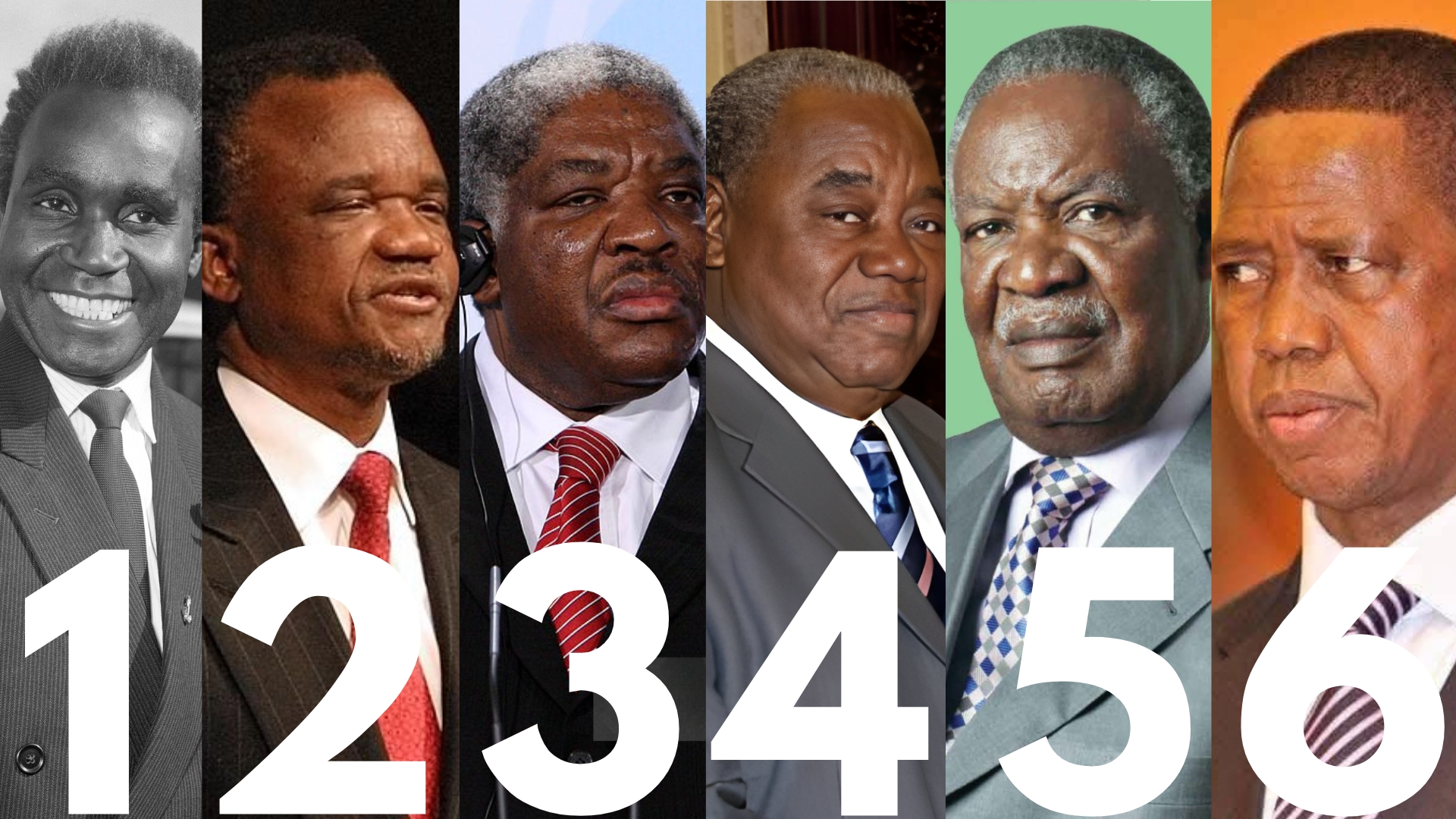
I am sure you have seen the comments flying around about “Who is most experienced” to take on the Presidency in August 2026. If you have not, I suggest you do a quick search; you will be up to speed. My assignment in this write-up is simple. Tukonkane bwino, because I wish to do my best and compare Makebi Zulu against the previous 7 presidents, particularly at the point of them becoming republican president, starting from Super Ken, FTJ, Levy, RB, Sata, ECL, and now HH who is leaving office on 13 August 2026, following what will be landslide victory for a 44 year old lawyer Makebi Zulu.
The purpose here is not to insult the men who came before. Zambia has had presidents from different schools of life. Some came from the classroom. Some came from the union trenches. Some came from business. Some came through the law. Some came through diplomacy. Some came through raw political combat. But the real question is not who was popular. It is not who had the loudest slogan. It is not who had the most emotional campaign song. The real question is this: when each of these men stepped into office, what exactly was in their file? What education did they carry? What professional formation had they received? What level of public administration had they touched? What level of legislative or executive experience had they accumulated? That is the test.
Let us begin where Zambia began.
Kenneth Kaunda became president in 1964 at the age of 40. He was young, energetic, ideologically driven, and riding the full force of the independence wave. His professional beginnings were in teaching. He trained at Munali Training Centre, qualified as a teacher, and worked as a teacher, boarding master and headmaster. At one point, he also did manual work linked to the mines. By the time he took office, his greatest qualification was not a university degree or a professional career in the modern sense. His qualification was political struggle. He had become Prime Minister of Northern Rhodesia and had emerged as the face of liberation. That is what put him into State House.
There is no doubt that Kaunda carried historic weight. He was the founding father. But if we are speaking narrowly about formal professional preparation for the presidency, he did not enter office with the sort of structured academic and state file that later presidents would carry. He came with nationalist legitimacy, moral authority, and a direct claim upon history. That is a different kind of power altogether.
Frederick Chiluba took over in 1991 at age 48. FTJ was not produced by lecture halls and polished boardrooms. He was forged in the hard furnace of labour politics. His educational background included completion of secondary school and professional correspondence courses in bookkeeping and credit collection. He had a working man’s biography. Bus conductor. Personnel clerk. Accounts assistant. Credit manager. But the role that truly prepared him for national power was his long service as chairman of the Zambia Congress of Trade Unions. For 17 years, he led labour, mobilised workers, sharpened his political teeth, and ultimately turned trade union muscle into presidential power.
Chiluba, therefore, came into office with immense organising experience and a fierce grip on mobilisation. What he did not bring was parliamentary experience, ministerial experience, or the kind of formal legal and state-administrative grounding that some later leaders would possess. He entered as a union field marshal. That is both his strength and his limitation in this comparison.
Levy Mwanawasa entered office in 2002 at age 53, and one must be fair here, because Levy’s pre-presidential file was heavy. He was a lawyer with an LLB from the University of Zambia. He had been admitted to the bar. He had built a respected private law practice. He had served as Solicitor General. He had also served as Vice-President. Mwanawasa did not arrive in State House by guesswork. He understood law, procedure, governance, and the internal corridors of the state. He was one of the most institutionally prepared men Zambia ever elected to the presidency.
Rupiah Banda assumed office in 2008 at age 71, and he too carried a serious résumé into the presidency. He had an international academic background that included study in economic history at Lund University. He had served Zambia abroad as ambassador to Egypt and the United States and represented the country at the United Nations. He had also managed state enterprises, served as minister, served as Member of Parliament, and served as Vice-President. Whatever else anyone says about Rupiah Banda, the man had seen government from several angles before taking the top office. He came in seasoned, diplomatic, and deeply acquainted with the state.
Michael Sata became president in 2011 at the age of 74. Sata’s route was different from almost everyone else’s. He was not a product of a classic professional ladder. He was a man of political instinct, street force, and hard administrative survival. His early formation included religious and vocational training. His work life took him through policing, railway work, union activism, and, later, through key positions in public life. By the time he entered State House, he had been Governor of Lusaka, Member of Parliament, and cabinet minister in important portfolios such as Local Government, Labour and Health. Sata was not academically decorated in the way some other presidents were, but in terms of political combat and practical administration, he had scars, mileage, and experience in abundance.
Edgar Chagwa Lungu entered office in 2015 at age 58. He came with legal training, holding an LLB, and had moved through both legal practice and politics before reaching the presidency. More importantly, before entering State House, he had already handled substantial national responsibilities, including service as Minister of Justice, Minister of Defence, and Secretary-General of the Patriotic Front. Edgar Lungu did not walk into office as a novice. He had already been inside the central engine room of government. One may debate his presidency endlessly, but on the question of pre-presidential exposure to the state, he had a substantial file.
Then there is Hakainde Hichilema, who became president in 2021 at age 59. HH came with strong academic credentials on paper. He holds a Bachelor of Arts in Economics and Business Administration from the University of Zambia and an MBA in Finance and Business Strategy from the University of Birmingham. His career before the presidency was rooted mainly in the private sector. He built his reputation as a businessman, corporate executive, entrepreneur, and large-scale farmer. He led major firms and chaired corporate boards. What he did not carry into State House was prior parliamentary service, ministerial service, or practical executive experience inside government itself. He came to the presidency with corporate exposure, opposition leadership, and political endurance, but not with prior state-administrative experience from inside the public system.
Now that the seven men are on the table, let us bring in Makebi Zulu.
Makebi Zulu was born on 25 December 1981. He is a lawyer by profession and holds a Bachelor of Laws Degree. In 2016, at age 34, he became a Member of Parliament for Malambo until 2021, serving as Provincial Minister for Eastern Province during that same period. That means he has touched the law professionally, touched legislation from inside Parliament, and touched executive administration from inside government. It also means that at 44, he would be approaching the presidency with exposure that is not theoretical, not imagined, and not borrowed from campaign speeches. It is already on record.
That is what makes his file difficult to dismiss. On a sober reading, men like Levy Mwanawasa, Rupiah Banda and Edgar Lungu entered office with heavier state files than Makebi currently has. That must be said plainly. But Kenneth Kaunda, Frederick Chiluba, Michael Sata and Hakainde Hichilema did not come into office with a stronger combined blend of formal legal education, parliamentary exposure and executive government experience than Makebi Zulu already possesses. That is where the argument sharpens.
So the point is not that Makebi Zulu is somehow greater than every man who has passed through State House. That would be childish. The point is that for a man of 44, his preparation is unusually strong, and stronger than most people are willing to admit. Zambia has had presidents with history, presidents with charisma, presidents with union muscle, presidents with business polish, and presidents with diplomatic mileage. Makebi enters this conversation with something different: a serious legal mind, legislative experience, and actual executive exposure from inside government. In politics, the music can fool people. But when the music stops, the file remains. And Makebi Zulu’s file is stronger than many of the men who came before him at the point they first stepped into office, particularly Hakainde Hichilema.
Leave a Reply