

By Brian Matambo | 10 March 2026
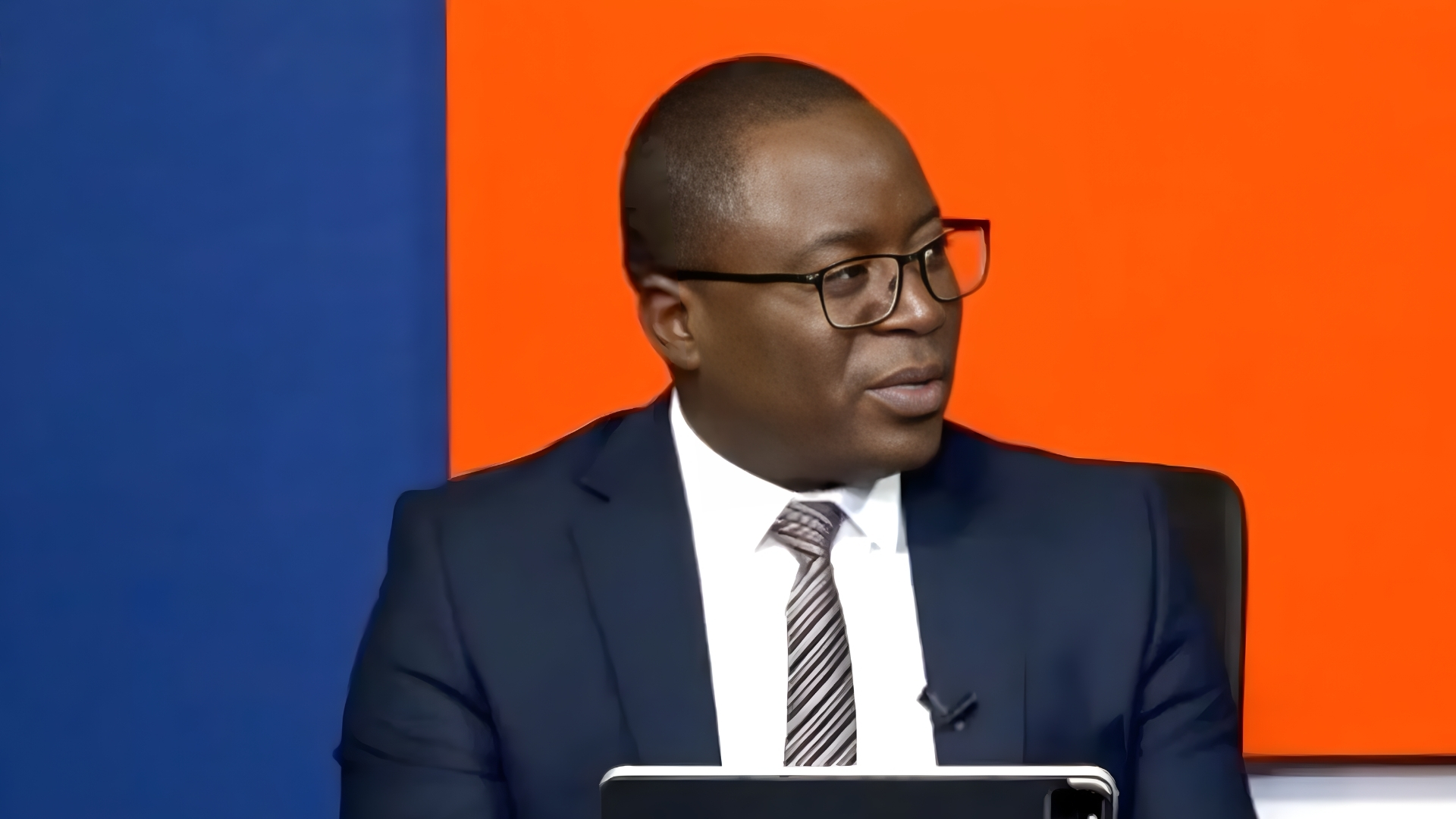
Watching Spotlight on Crown TV, I came to a conclusion that a lot of people underestimate Honourable Makebi Zulu’s ability to handle difficult questions. The anchors on the Monday night show seemed prepared to pelt the leading presidential candidate with so many testing questions, and yet MZ8, as he is now fondly called, gracefully, with humility and wisdom handled the questions around his political journey with unexpected expertise. Most people were left with awe. I was not surprised. I know this candidate, and this country is yet to see the value this man brings to the nation. Prepare to be “wowed”.
The hosts introduced their guest with a question that has lately been circulating in political corridors: Is Makebi Zulu the chosen one? It was an interesting way to begin.
In politics, that kind of framing can easily inflate a man’s ego. It is the sort of question that tempts a candidate to clothe himself in the language of destiny. Many politicians would have leaned into it. Some would have embraced it outright. But that is not what happened.
Makebi Zulu stepped away from the mythology almost immediately. He did not describe himself as a savior. He did not speak about destiny. Instead, he described his entry into politics in far simpler terms. He spoke about service. He spoke about contribution. And he spoke about what he called pressing the reset button for Zambia.
Now pause there for a moment. In political communication, phrases matter. They are not accidental. When a candidate repeats a phrase several times in a national interview, he is signalling the central thesis of his campaign.
“Reset button.”
That phrase quietly became the backbone of the entire conversation.
What Zulu was arguing, essentially, is that Zambia is not simply dealing with policy disagreements between competing parties. His argument is that the country’s governing system has drifted outside our constitutional boundaries, and that what is needed is not cosmetic adjustment but structural recalibration.
You may agree with that diagnosis. You may reject it entirely. But the argument itself deserves examination.
Now let us consider how the conversation unfolded. One of the earliest themes that Makebi Zulu raised was the question of democratic atmosphere in the country. He spoke about the growing number of citizens facing charges such as hate speech and seditious practices for expressing criticism of government. In his telling, the democratic space that many expected to widen after the 2021 elections has instead become constricted. Take for instance the jailing of Patriotic Front Secretary General Raphael Mangani Nakacinda for merely using the word “Ubututu”. When a government is this sensitive to commentary, the nation needs a reset.
Makebi Zulu suggested that Zambia must return to a posture where criticism of government is not automatically treated as hostility to the state.
Now let us move to another issue that dominated the interview. The economy.
The Hakainde Hichilema regime, by habit, speaks in numbers, graphs and digital calculators. Growth projections. Inflation curves. Debt restructuring milestones.
Makebi Zulu took a swipe at this detached approach to national leadership. He reduced the entire economic conversation to a single question.
Is life affordable?
It was a simple test, almost deceptively simple. Can a family still afford mealie meal? Has the price of cooking oil come down? Is transport cheaper? Are rents manageable? If the answer to those questions is no, then the macroeconomic story becomes irrelevant to the household.
That was the heart of his critique. He did not deny that the government presents statistics showing improvements in certain indicators. What he challenged was whether those indicators translate into relief for the ordinary citizen.
But how does this really look? On one side stands the government narrative built on graphs and projections. On the other side stands the lived experience of the voter. When those two stories diverge, politics becomes volatile.
Honourable Makebi Zulu spent the longest time discussing mining. Zambia’s history has always been intertwined with its mineral wealth. Copper built towns. Copper built schools. Copper financed the early ambitions of the republic.
Yet the question that has haunted successive administrations is always the same. Who really benefits from that wealth?
Makebi Zulu argues that the current structure of the mining sector allows foreign conglomerates to extract large profits while relatively little remains within the domestic economy. Production increases. Export figures rise. Yet the communities surrounding those mines often remain among the poorest in the country, if not on the entire continent of Africa or the world.
In his view, that contradiction should trouble policymakers far more than it currently does.
He spoke at length about the treatment of artisanal miners on the Copperbelt. These small-scale miners, sometimes labelled jerabos, have increasingly been removed from mining sites in efforts to formalize the industry.
Makebi Zulu suggested that this approach misses a crucial social reality. For many families in mining communities, small-scale mining is not criminal opportunism. It is the only available livelihood.
Remove that livelihood without replacing it, and the result is predictable. Poverty deepens. Frustration grows. Eventually crime follows.
His proposal was straightforward. Organize these miners. Regulate them. Provide safety oversight. Integrate them into the mining economy instead of driving them out of it.
Whether such a system can be implemented successfully is another debate entirely. But the principle he was articulating was unmistakable: Zambia’s mineral resources must work first for Zambians.
The conversation then turned to one of the country’s major mining assets, Mopani Copper Mines. Makebi Zulu questioned the logic of certain investment arrangements around the mine, arguing that Zambia risks surrendering strategic control while receiving no benefit at all.
He framed the issue in very simple terms. If a mine valued in the hundreds of millions of dollars is transferred to an investor who then uses that same valuation to finance operations, what immediate financial benefit has the country actually gained?
It was a pointed question. And it led naturally into a broader discussion about corruption and public contracts.
At one point the hosts raised the Lusaka–Ndola dual carriageway project. Makebi Zulu described the escalation of the project’s cost and questioned the financial structure surrounding its implementation. The confusion where NAPSA is financing the road construction but the toll gates are given to the hired construction company reeks of corruption.
Now here again we must separate law from politics. In law, infrastructure contracts are governed by procurement rules, financing agreements, and statutory oversight mechanisms.
In politics, the question is simpler. Does the public trust the deal?
When costs escalate dramatically and funding structures become complex, citizens begin to suspect that someone somewhere at Community House is benefiting disproportionately.
Again Makebi Zulu’s solution to this is institutional reform. He argues that investigative bodies such as the Anti-Corruption Commission, the Drug Enforcement Commission, and the police under his leadership will no longer ultimately report to the presidency. Instead they will report to Parliament, allowing them to investigate wrongdoing without executive influence.
This idea reflects a deeper concern he raises during the interview. The concentration of power in the presidency. Makebi Zulu argues that Zambia’s constitutional architecture gives enormous authority to one individual. When that authority is exercised responsibly, the system functions. When it is abused, the entire structure becomes vulnerable. And under Hakainde Hichilema, the abuse has been rampant, and Zambia is paying the price.
His answer was structural reform. Create systems strong enough to restrain even a flawed leader.
And about opposition politics, anyone following Zambia’s political landscape knows that the Patriotic Front has struggled with internal disputes since losing power in 2021. Leadership contests, legal battles over party control, and competing alliances have complicated the opposition’s attempt to reorganize. Makebi Zulu addressed this issue directly without flinching.
He explained that the Tonse Alliance was originally created as a coalition framework designed to preserve cooperation among opposition parties if the PF’s legal identity became contested, and not a special purpose vehicle.
But alliances, like parties, are not immune to internal disagreements.
The most revealing moment of the interview came when the hosts asked Honourable Makebi Zulu whether he would accept another opposition leader as presidential candidate if that leader emerged through a collective process.
His answer was immediate. Yes.
He explained that he had received invitations to run independently under other parties but he remained in the Patriotic Front. I would argue that had Makebi Zulu taken up the opportunities to run under other political parties, it would deepen opposition fragmentation.
Leadership, Makebi Zulu said, must emerge through collective agreement. In a political culture where breakaway factions appear overnight, that statement carries weight.
So, is Makebi Zulu the chosen one?
Politics rarely answers questions that way. Nations do not choose leaders because they are destined. They choose leaders because they represent a direction that citizens believe is worth testing.
What Monday night revealed is that Makebi Zulu has pinpointed the fundamental point of failure and he is prepared to fix it, not alone, but with a competent team alongside him. He knows that his strength is around issues of the constitution, leadership, integrity, loyalty, faith, and a heart for the people. But he also knows that the presidency is a team effort.
For most of the people that resonate with his qualities, Makebi Zulu is the chosen one. For him, we are all called. We must answer that call to serve.
Leave a Reply