

By Brian Matambo | Sandton, South Africa
This week I spent my time in Lusaka. There were several matters to attend to. One of them was the press conference held by the Council of Elders at M’kango Golfview Hotel, where Prince Akashambatwa Mbikusita-Lewanika delivered a powerful and historically grounded keynote calling for a Fourth Republic. That moment deserves serious reflection in its own right. You can read the full account here:
But while constitutional reform was being discussed in conference halls, another drama was unfolding in the corridors of the Magistrates’ Court. Patriotic Front Secretary General Honourable Raphael Mangani Nakachinda appeared in court four times this week. I managed to attend three of those sessions.
The first matter related to comments he made in response to a post on the Mast Newspaper Facebook page. On 26 September, the Mast had reported that a “well-placed source within government had hinted” that former President Edgar Lungu’s residence was to be “raided by a combined team of security officers” that evening. Many citizens commented on that post. Nakachinda, however, found himself indicted over his response in which he suggested that President Hakainde Hichilema was deploying state security to arrest his predecessor.
The Editor-in-Chief of The Mast, Jeremy Kondwani Munthali, testified in that matter. The details of that court appearance are documented here:
The second matter this week was adjourned to a later date after the usual decorated back-and-forth drama in the courtroom.
The third session I attended involved testimony from a Digital Forensic Officer in a separate case in which Nakachinda is charged with seditious practices. This charge stems from remarks he made concerning alleged aflatoxin contamination in maize, mealie-meal, and even dog food. He publicly challenged the government, suggesting that contaminated imports posed serious health risks.
What makes this particular case intriguing is that subsequent public broadcasts acknowledged the presence of aflatoxins. ZNBC carried a report in which government spokesperson Thabo Kawana confirmed concerns around contamination. The Minister of Health at the time, Honourable Elijah Muchima, also addressed the media on the issue. That does not determine the legal outcome of the sedition case, which remains before the courts. But it does raise a legitimate question: when a political actor raises a public health alarm that is later acknowledged by state authorities, at what point does criticism become sedition?
Now let us talk about timing, because politics is not only what happens, but also when it happens.
Before Honourable Nakachinda was eventually jailed, the Patriotic Front was awaiting a consent judgment ruling expected in early October 2025. Around the same period, tensions rose within PF structures, with pressure mounting from certain quarters for a speedy convention, even as the party was still navigating leadership and alliance questions. When the convention did not happen, an attempted internal rupture followed, which many within the party described as a coup attempt on the Tonse Alliance.
Sean Tembo, Chris Zumani Zimba, Brian Mundubile, Kelvin Bwalya Fube, among others, had attempted to grab the Tonse Alliance. The attempt would fail this time around. PF youths reportedly moved quickly to resist the manoeuvre, and senior alliance figures, including Honourable Given Lubinda and Dr Danny Pule, called for calm and order. A reconciliation meeting was scheduled for 18 October to mend fractures and restore discipline.
Just a couple of days after the so-called reconciliation, Hon Nakachinda, Secretary General and a key enforcer of order in an opposition machine, was about to learn his fate.
On 21 October 2025, the High Court upheld his 18-month conviction for defamation of the President. A bench warrant was issued, and he was taken into custody. From that moment, the political reality changed. A party that was already fighting internal fires lost a key leader at the very moment it needed him most.
His appeal has since faced repeated adjournments. In a purely legal reading, adjournments happen. In a political reading, repeated adjournments function like a padlock. And that is why many PF members do not interpret his incarceration as an isolated court outcome. It is a political event in a court wig.
Nakachinda is currently serving an 18-month sentence. The conviction relates to remarks he made in December 2021, alleging that President Hakainde Hichilema was summoning judges to his residence. He was charged under Section 69 of the Penal Code, the provision that criminalised defamation of the President.
That law was repealed in December 2022. However, the courts held that because the alleged offence occurred before repeal, liability still attached. His appeal has been pending, and bail pending appeal was denied. He was taken into custody and has remained there.
On 17 December 2025, he received an additional six-month sentence under Section 70 of the Penal Code for expressing hatred or contempt on tribal grounds. Worth noting that the word he used on President Hakainde Hichilema, “Ubututu”, is hardly hate speech. And it is clearly not tribal, especially as it was heard in court that, in fact, Hakainde Hichilema and Raphael Nakachinda both come from Bweengwa, and in fact, Nakachinda is allegedly related to Hichilema through their grandmother. Nonetheless, the court ruled against Nakachinda, and that sentence was ordered to run concurrently with the 18-month term.
Whether one agrees with his rhetoric or not, the pattern is unmistakable. A former minister. A former nominated Member of Parliament. The Secretary General of the largest political party in Zambia. Moving between courtrooms. Convicted. Denied bail pending appeal. Facing additional proceedings. Repeated adjournments.
Taken individually, each case may be defended as routine prosecution. Taken together, they resemble political containment. Honourable Nakachinda is not serving time for violence, theft, corruption, or abuse of office. He is serving time for words. Whether one calls that enforcement or persecution depends on political alignment, but the fact remains: in Zambia today, speech can land you in prison. The colonial-era speech provisions remain active instruments in politically sensitive cases. Relentless litigation has the practical effect of removing a key opposition administrator from the political arena at a critical time. Could Nakachinda have been right when he said President Hakainde Hichilema was calling judges to his house? Perhaps history, and not the courts, will be the more sincere, accurate, and fair judge.
You may disagree with this entirely. You may find this language excessive. But that is not the constitutional question.
The constitutional question is this: what is the climate when speech leads to prison, when political commentary attracts criminal sanction, and when opposition leaders rotate between court and custody in rapid succession?
Ok, in the spirit of compare and contrast, let me invite you to the deep end. Consider a separate matter.
On 16 August 2025, Enock Simfukwe was beaten an a video recording of that grotesque ordeal went viral on social media. The accused included Maria Zaloumis and others. But this is not a routine matter in the mind of the public because the names are not politically neutral. Maria Zaloumis is the daughter of the current Chairperson of the Electoral Commission of Zambia, Mwangala Zaloumis, whose past political affiliations with the UPND have long been part of Zambia’s public discourse. In a country where electoral credibility is sacred, such proximity between an accused person and the head of the electoral body does not merely raise eyebrows; it raises constitutional questions.
One of her co-accused, Nathaniel Barthram, is also linked by close relation to a prominent and highly vocal supporter of President Hakainde Hichilema, Andrew Ejimadu, popularly known as Seer 1. The powers that be should know that the Zambian people and observers world over are able to compare and contrast. When an accused person is closely connected to powerful institutional figures, every prosecutorial decision is magnified. In this case, the reduction of charges and the granting of bail were interpreted by many as evidence of a system that bends more gently around the connected than the ordinary.
Within two months, the murder charge was reduced to manslaughter. Bail of K20,000 was granted. The accused walked free. The presiding judge recused herself due to personal ties with the Zaloumis family, and the matter entered a procedural pause as it awaited reassignment. In law, these steps can be explained through prosecutorial discretion and judicial ethics. In politics, they are interpreted differently. They are interpreted as opportunities for freedom.
The legal explanation in that case is prosecutorial discretion and judicial ethics. In Nakachinda’s case, the explanation is the application of the law as it stood at the time of the alleged offence. Personally, I hold the view that in the current judicial climate, a politically exposed opposition figure, like Honourable Nakachinda, faces an uphill battle in the courts, regardless of the merits. Their only chance is the court of public opinion. A challenge that members of the opposition, civil society, and the patriotic front must take up. Perception does not live in statutes. It lives in the public square.
This vivid contrast is uncomfortable for many observers because it appears unjust. One man merely speaks, and behold, he is imprisoned. Others are implicated in a murder, and yet they walk free on bail while proceedings continue. One case moves with decisive consequence. Another pauses with indefinite legal arrogance.
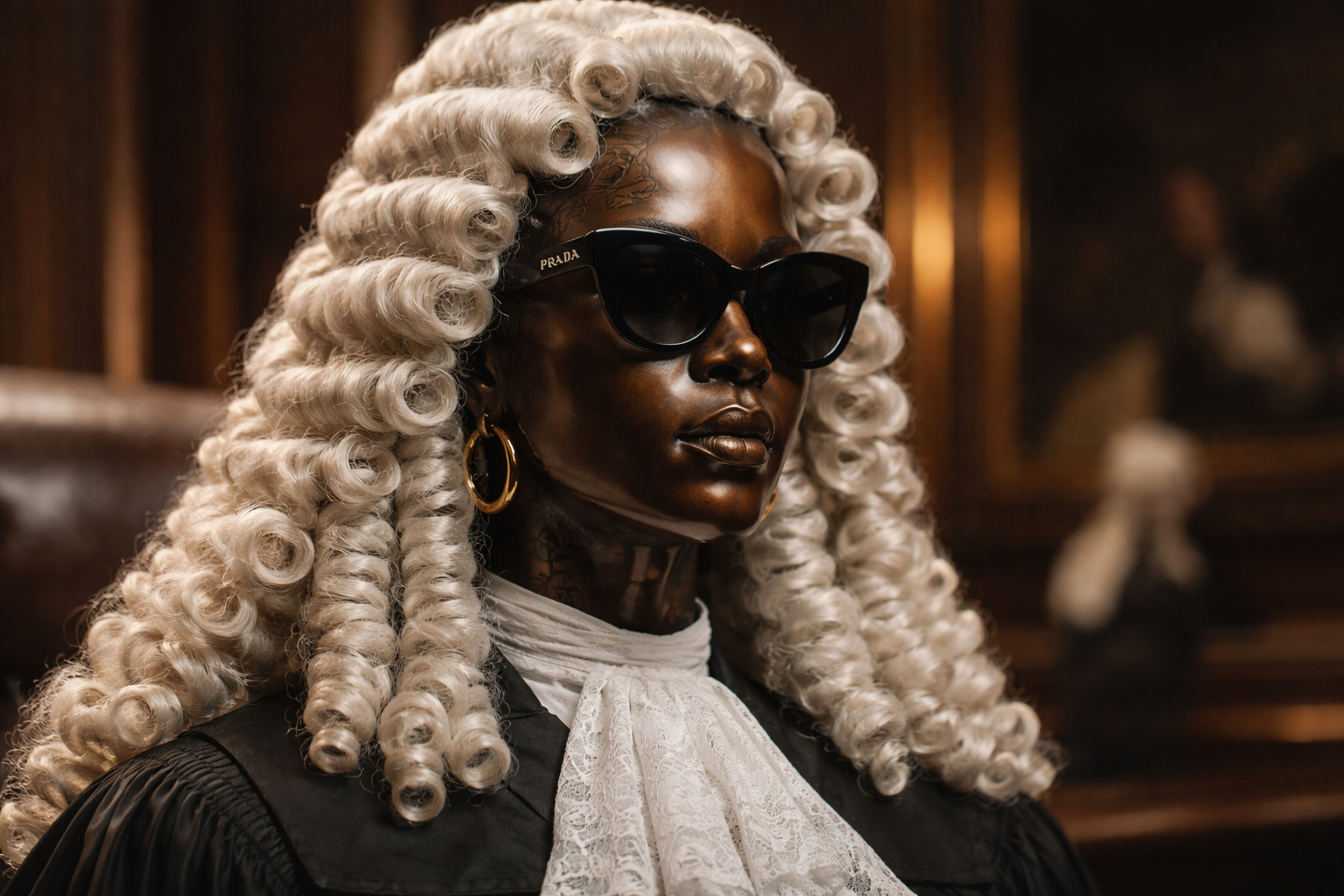
The law, we are told, is blind. Yet in Zambia today, as in the case of one Raphael Mangani Nakachinda, the law sometimes wears expensive sunglasses. It appears to notice political alignment before it notices principle.
This is not about idolising Raphael Nakachinda. It is not about demonising the courts. It is about the broader democratic climate.
When the Secretary General of the largest political party is behind bars during a politically sensitive season, questions will arise. When appeals are repeatedly adjourned, questions will arise. When speech offences continue to anchor criminal convictions years after reform efforts began, questions will arise.
We need to strip away the tinted lenses from Lady Justice through which it appears to be operating. Justice must return to its original posture, blind to status, blind to surname, blind to political colour. Because that is the only way democracy can thrive, when the law is blind. That is the only way the nation can enjoy the contributions of men like Honourable Nakachinda. That is the only way victims like Enock Simfukwe would get justice – WHEN THE LAW IS TRULY BLIND.
Leave a Reply