

By Brian Matambo | 6 February, 2026
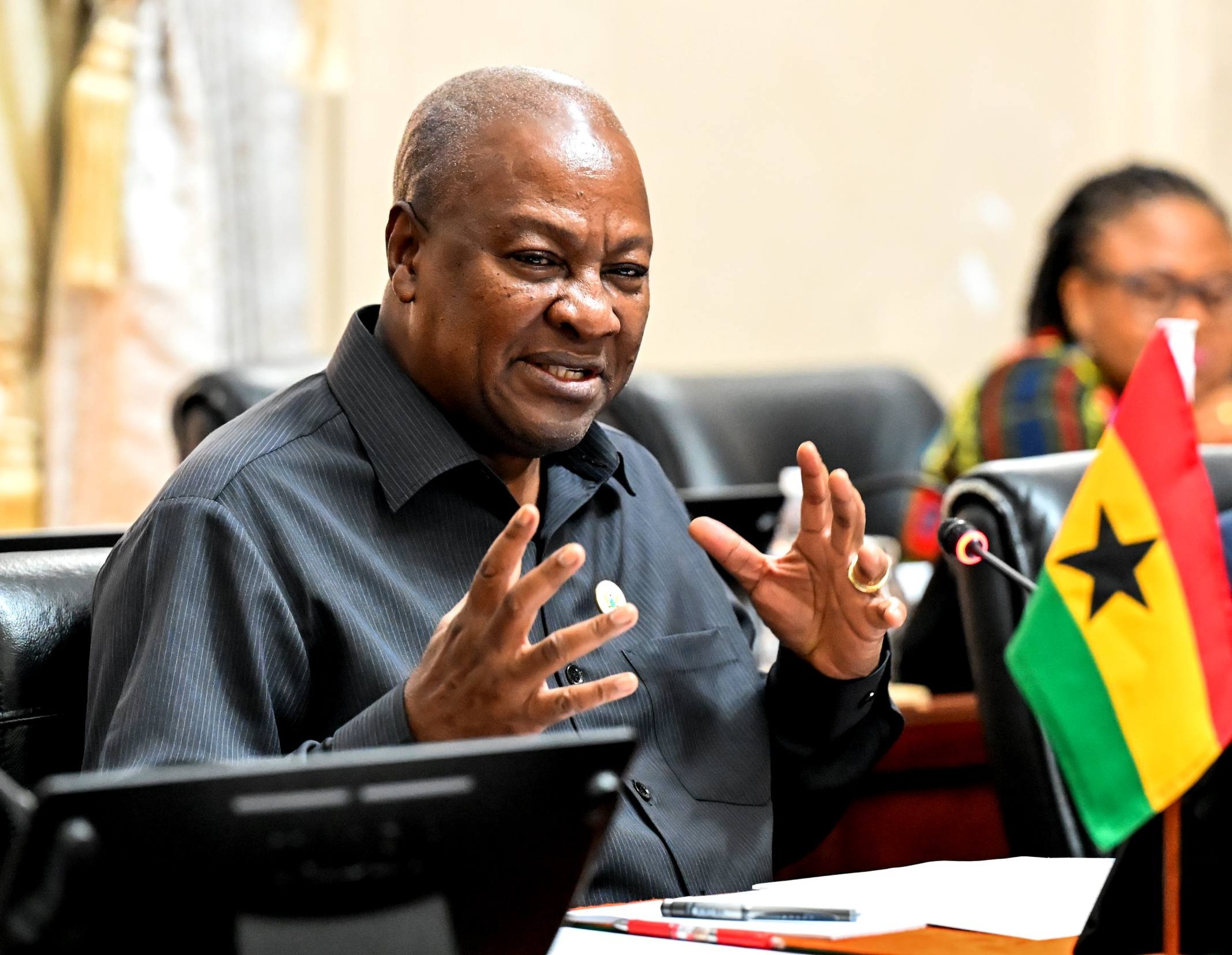
President John Dramani Mahama of Ghana has reminded his counterpart, President Hakainde Hichilema, that Africa does not need strong men. It needs strong institutions. Speaking to Parliament in Lusaka, the visiting Ghanaian leader delivered what has now emerged as a timely and unmistakable rebuke to the Zambian President, delivered politely, diplomatically, but firmly.
Mahama’s words were not casual in any way. Rather, they were deliberate, carefully chosen, and they landed in a country where institutions have, over the last few years, been treated more as obstacles to be navigated, bent, or bypassed.
Last year alone, President Hichilema presided over a series of actions that raised serious questions about his respect for institutions. Court rulings on Bill 7 were ignored because they stood in the way of executive intent. In another high-profile instance, the state found itself suing the widow of a former head of state in a bitter and unprecedented legal battle over burial rights, an unseemly fight that many Zambians have interpreted not as a matter of law, but of unresolved personal and political animosity.
In Mufumbwe, several small-scale miners were allegedly killed during a state operation whose circumstances remain unclear to this day. The official explanations have shifted, facts have blurred, and accountability has been conspicuously absent. In Nseseli, similar incidents allegedly followed, reinforcing the sense that force was being exercised without transparency, restraint, or institutional consequence.
In the same period, the arrest and detention of Raphael Nakachinda on charges based on a repealed law highlighted a troubling elasticity in the application of the law. The message was simple and chilling: the state was willing to do whatever it took to settle scores for those in authority. That message was reinforced when Zambian authorities crossed borders into Zimbabwe, disregarding established international protocols, to seize a TikToker known as “Why Me”, an act more befitting rogue conduct than a constitutional democracy.
The year 2025 showed a governing style that displayed a blunt disregard for institutions, procedure, and the rule of law. Zambians saw parliamentary procedure misconstrued as a tool to expel MPs, such as Honourable Tasila Lungu, who was at the time mourning her father, former Republican President Edgar Chagwa Lungu, but whom the executive found inconvenient. Meanwhile, Parliament retained MPs who were expelled by their respective parties but were considered useful to the executive, such as Robert Chabinga. The courts were weaponised for political ends. Law enforcement increasingly appeared less as neutral guardians of public order and more as instruments of executive will.
It is against this backdrop that Mahama’s speech must be understood.
Standing before Zambia’s National Assembly, the Ghanaian President did not name Hichilema. He did not accuse. He did not scold. Instead, he invoked history and principle. Quoting the words of Barack Obama, spoken during his visit to Ghana, Mahama reminded lawmakers that Africa does not need strong men. It needs strong institutions. He emphasised that democracy survives only when Parliament and the judiciary operate independently, in the public interest, and when leaders respect their oath to uphold the Constitution.
Coming from Ghana, a country that has earned continental respect for peaceful transitions of power and institutional continuity, the message carried weight. It also carried implication. In a subregion where democracy is backsliding, where coups have returned and constitutions are being hollowed out by executive arrogance, Mahama’s assertion that Ghana is determined to prove democracy can still work was a quiet contrast to Zambia’s current trajectory.
In diplomacy, the sharpest rebukes are often the most courteous. Mahama’s speech was precisely that. A brotherly reminder. A polite warning. A reaffirmation that legitimacy is not sustained by personal authority, but by restraint. Not by dominance, but by respect for institutions that outlive any single leader.
Whether President Hichilema chooses to hear that message is another matter. But it was spoken. Publicly. In Parliament. And history, as always, was listening.
Leave a Reply